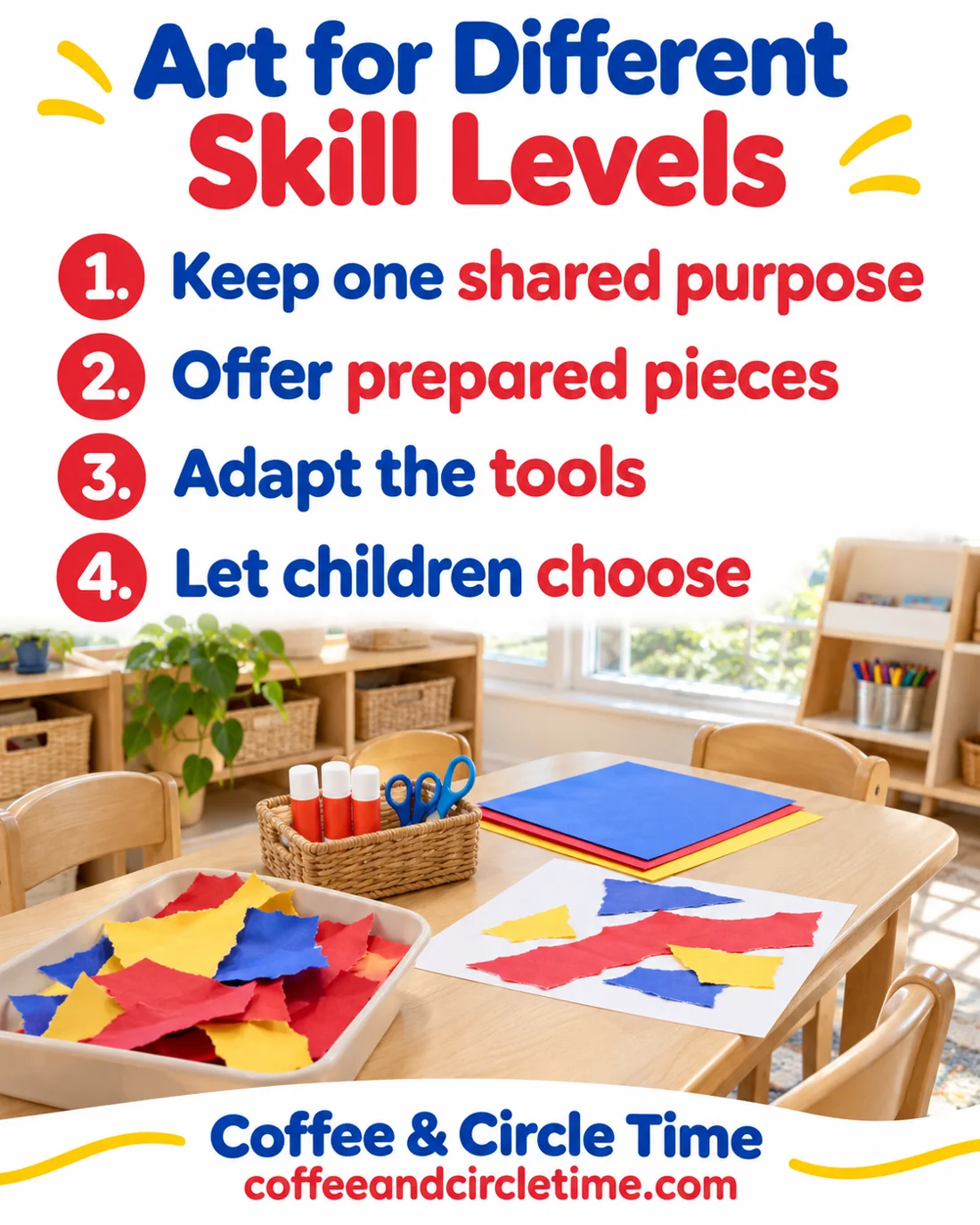
Keep the main material and purpose the same, then change how much preparation, tool support or choice each child needs. Children can explore one invitation together without being expected to produce matching work.
Keep the learning invitation shared while making the starting point accessible.
Hi, I’m Ms. Jenn, a preschool teacher with 20 years of experience. I currently teach in a two year old classroom and share practical ideas from everyday teacher life here at Coffee and Circle Time.
Choose one clear purpose
Decide whether you are offering color mixing, making marks, exploring paper or practicing a familiar tool. A single purpose makes it easier to adapt the activity without turning it into several unrelated projects.
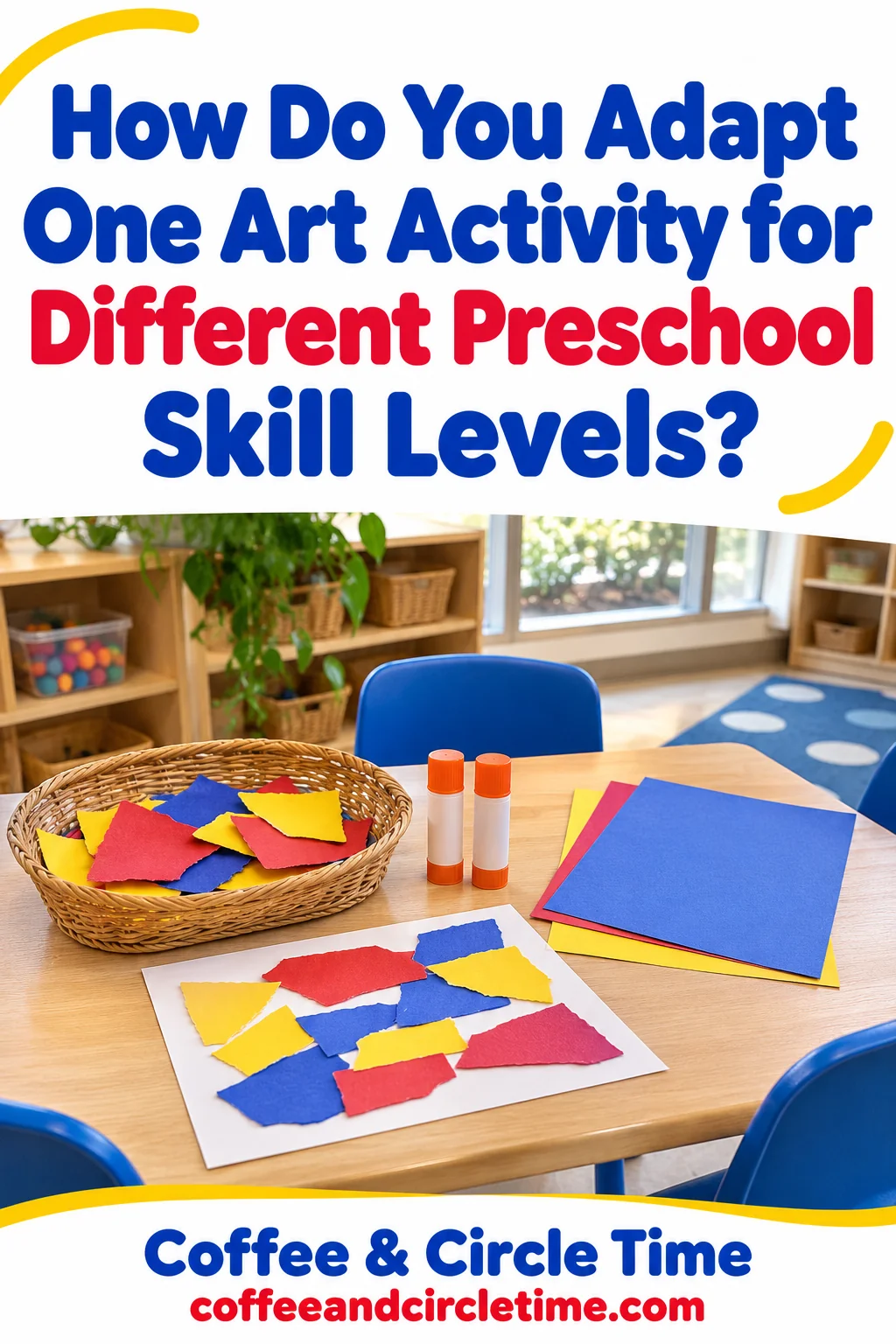
For a collage invitation, the shared purpose could be arranging and attaching paper. Cutting perfect shapes does not have to be part of that same task.
Write the purpose in your plan in plain words. You can check each proposed adaptation against it before adding extra supplies.
Change preparation before changing expectations
Provide some larger paper pieces alongside whole sheets. A child who is not ready to cut can choose and arrange pieces while another child creates their own.
Offer paper that is easy to handle and a stable work surface. Place a small amount of material within reach instead of filling the whole table with choices.
Preparing access to a material is different from completing the artwork for the child.
Offer two useful ways to begin
Show a simple starting action, such as placing two pieces on the page before attaching them. Then let children decide how to continue.
A child ready for more complexity might overlap pieces, create a pattern or explain a design. You can offer that possibility without making it the superior version.
Avoid naming the options easy and hard in front of the group. Describe the actions instead, such as tearing paper or cutting paper.
Use tools that fit the learner
Choose age appropriate tools approved for your setting. Demonstrate their intended use and stay close enough to provide the supervision the activity needs.
If a tool is difficult to grip, consider a suitable alternative already used in your classroom. Do not add improvised attachments that could loosen or create small parts.
A child who needs support can still choose colors, placement and when the work is finished. Keep those decisions with the child wherever possible.
Give prompts instead of a model to copy
Ask what the child wants to try next or describe what you notice: “You put the blue paper beside the yellow.” This leaves room for their own idea.
If you demonstrate, use a separate scrap rather than adding marks to the child’s work. Ask before helping with any part of the page.
Do not require an advanced child to become an unpaid helper for everyone else. They also deserve time to explore their own materials.
Review access after the activity
Notice which parts needed repeated adult assistance. The setup may need changing if children could not start until you performed several steps for them.
Keep a short planning note about what supported participation. Record actions rather than ranking the finished products.
For the next session, change one barrier at a time. A smaller group, clearer tool demonstration or more reachable tray may help more than creating another activity.
Keep the learning invitation shared while making the starting point accessible.

Leave a Reply