

Group materials by when you will use them, keep shared supplies in their usual home and give each planned activity one clear preparation note. A weekly system should help you find the next lesson without repacking the entire classroom.
Organize around the next action you need to take, not around creating a perfect looking planner.
Hi, I’m Ms. Jenn, a preschool teacher with 20 years of experience. I currently teach in a two year old classroom and share practical ideas from everyday teacher life here at Coffee and Circle Time.
Begin with the actual schedule
Look at the week’s planned invitations, staffing changes and events. Identify which materials need preparation and which are already available in the classroom.
Avoid creating five elaborate daily kits if the plan includes flexible activities that may move. Your storage should reflect how the week really works.
Use a short list of what is missing or needs checking. This separates preparation tasks from supplies that are already ready.
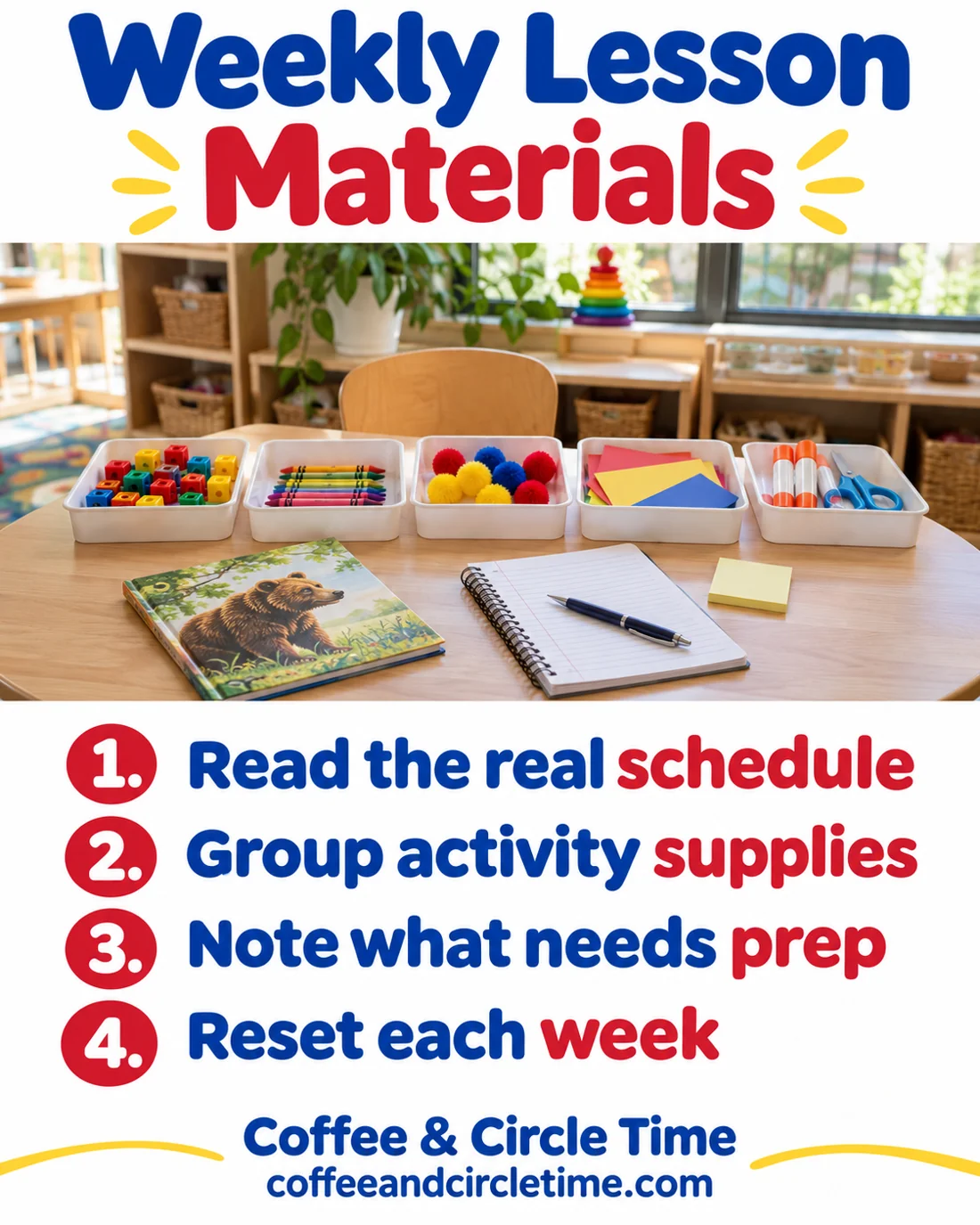
Give each day a simple place
Use existing trays, folders or designated shelf spaces if they are suitable. Label the day or activity clearly enough that a teaching partner can understand it.
Store only the lesson specific materials there. Keeping every shared tool inside a daily kit can make the rest of the classroom harder to use.
The system works when another adult can find what is needed without decoding your memory.
Add one preparation note
Write the action still required, such as setting out paper or checking a book. Keep the note short and specific.
Include essential setup information that would not be obvious from the materials alone. Do not bury supervision or school procedure requirements in a decorative planner.
Use the approved location for any child specific information. General lesson trays are not a place for confidential notes.
Keep unfinished preparation visible
Give items that are not ready a distinct place or mark in the plan. Mixing them with completed kits makes it easy to assume the work is done.
If supplies are missing, use your school’s request process or choose an appropriate alternative. You do not need to buy materials personally to make the plan legitimate.
Review the next day’s materials during an appropriate planning period rather than while supervising a busy transition.
Allow the plan to change
If an activity moves, move its tray or note with it. Avoid rewriting several pages just to change one invitation.
Keep a small space for ideas you are saving for later. They do not need to remain mixed into this week’s active materials.
A useful weekly system makes adjustments visible without requiring the original schedule to be perfect.
Reset at the end of the week
Return reusable supplies, remove outdated notes and record anything useful for next time. Keep only materials you can identify.
Notice which parts of the system you actually used. If a label or container added work without helping you find anything, simplify it.
Prepare the next week from that information. The best system is the one that remains understandable during an ordinary busy day.
Organize around the next action you need to take, not around creating a perfect looking planner.

Leave a Reply