

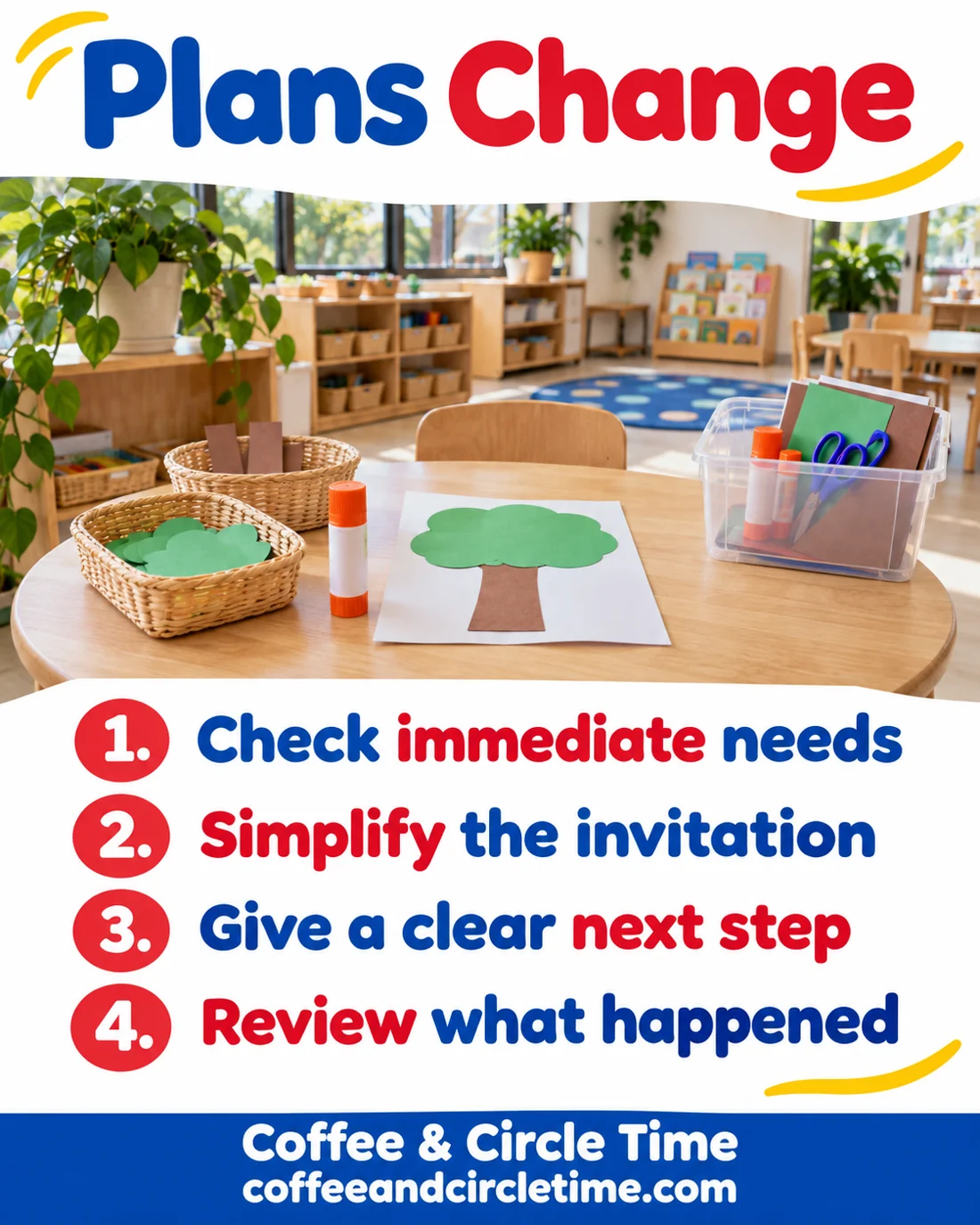
Check immediate needs, simplify the invitation and choose a manageable next step. You can adjust an activity without treating the children or yourself as failures, then review what happened during planning time.
Keep the purpose, change the part that is not working and give the group a clear next action.
Hi, I’m Ms. Jenn, a preschool teacher with 20 years of experience. I currently teach in a two year old classroom and share practical ideas from everyday teacher life here at Coffee and Circle Time.
Separate a change of direction from a concern
First notice whether the issue is safety, distress, unclear instructions or simply children using the materials differently than expected. Those situations need different responses.
Follow your school’s procedures for any immediate concern. Do not keep an activity going just because you spent time preparing it.
If children are engaged in a suitable alternative use of the materials, the invitation may be changing rather than failing.
Reduce the demands
Remove an unnecessary step or offer fewer choices if the setup is difficult to manage. Keep the main purpose in view.
For example, children might explore paper and drawing instead of completing several assembly steps. A simpler invitation can still provide meaningful choices.
Changing the plan is a teaching decision, not an admission that the day is ruined.
Explain the next action briefly
Use a clear statement about what is available now. Avoid a long explanation about why the original project did not work.
Give children a concrete way to continue or move to an established alternative. Coordinate the change with your teaching partner.
Do not make children responsible for comforting you about a disappointing lesson. Keep adult frustration out of the activity.
Avoid rescuing the finished product
Making every piece yourself may create a completed display, but it does not restore the children’s experience.
Notice what children were actually able to do and choose. That information is more useful for planning than a wall of identical adult completed work.
You can keep unfinished work or let it go according to the children’s preferences and your classroom routine.
Review the practical cause
During appropriate planning time, ask whether the materials, instructions, group size or timing created the problem. Use specific observations.
Separate a one time disruption from a repeated pattern. An unusual schedule change may explain more than the activity itself.
Choose one adjustment for the next attempt rather than redesigning everything from memory of a stressful moment.
Keep what you learned
Record a short note about what children tried and what support was missing. This makes the preparation useful even if the original outcome did not happen.
If the activity requires resources or supervision you cannot provide, choose a different invitation or discuss the need with your supervisor.
A flexible classroom plan still has structure. The structure is the learning purpose, available support and a clear next step.
Keep the purpose, change the part that is not working and give the group a clear next action.

Leave a Reply