
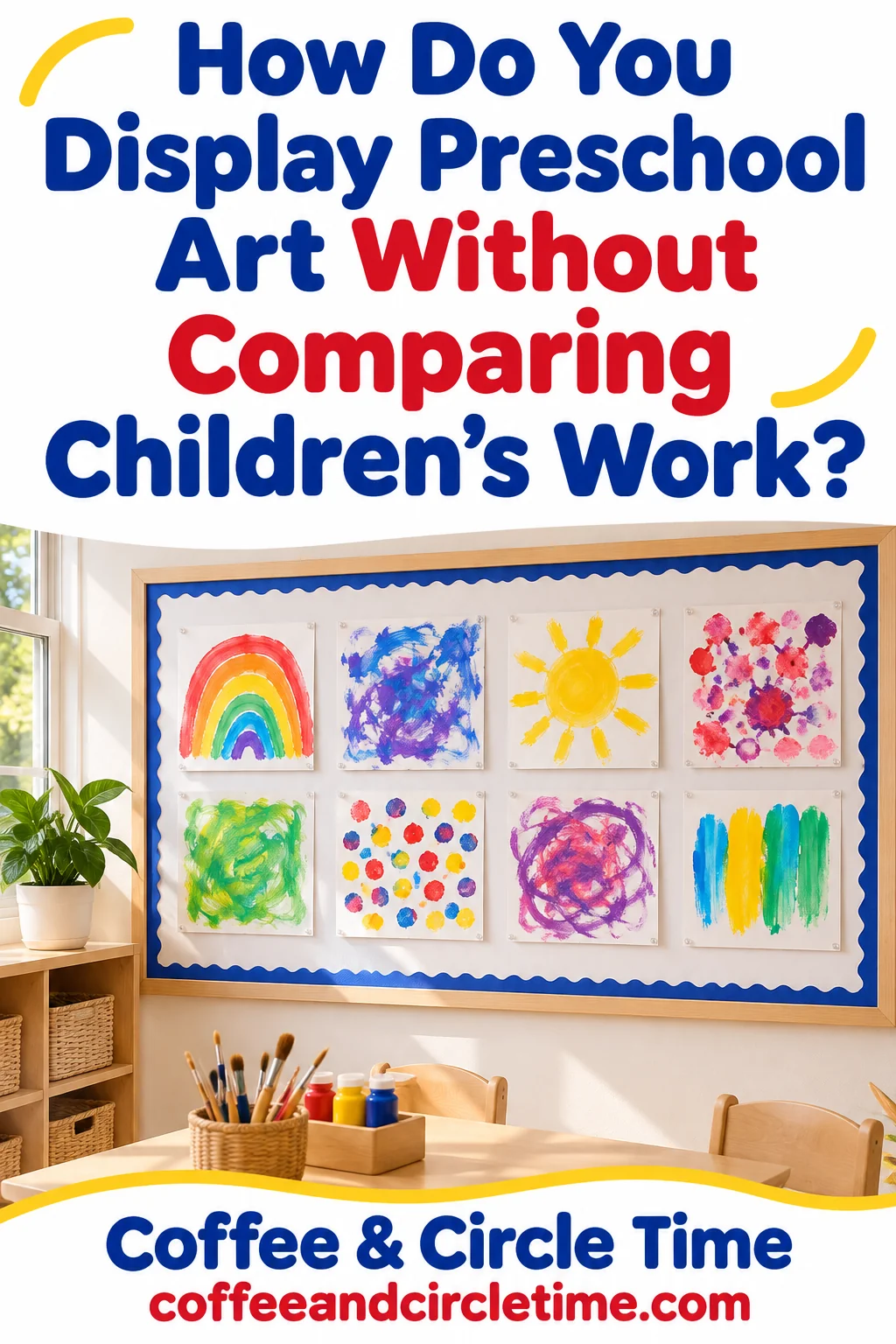
Display children’s work with equal care, describe the process and allow different outcomes to remain different. A shared display can represent a classroom experience without ranking which picture is neatest or most realistic.
Show what children explored without turning the wall into a comparison of their abilities.
Hi, I’m Ms. Jenn, a preschool teacher with 20 years of experience. I currently teach in a two year old classroom and share practical ideas from everyday teacher life here at Coffee and Circle Time.
Choose the story of the display
Decide whether you want to show exploration of color, different uses of paper or children’s ideas about a topic. That is a more useful starting point than selecting the best pictures.
A brief heading about what children tried gives visitors context. Keep the explanation in ordinary language that families can understand.
If the activity produced different kinds of work, let the display show that variety rather than trimming everything into the same shape.
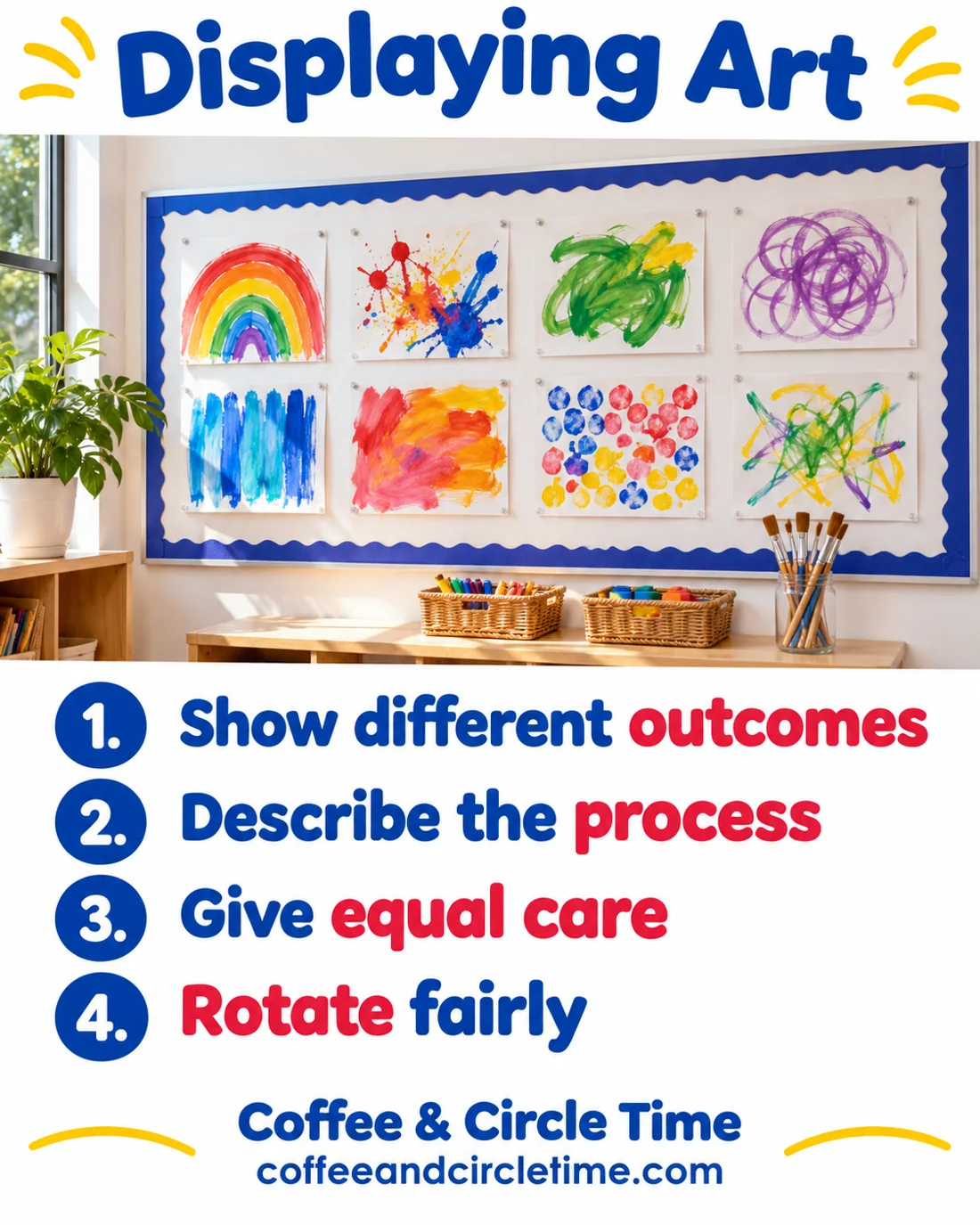
Give each contribution equal care
Use a consistent amount of space where possible and attach work securely using your setting’s approved display methods. Avoid placing one child’s page in a noticeably grander frame.
Do not repair, redraw or add details solely to make the display coordinated. Ask before altering a child’s work for any practical reason.
The display should communicate that every child’s decisions belong in the classroom story.
Include the process
A short factual note can explain that children tested broad brushes, layered paper or chose their own colors. This shifts attention from adult expectations about finished pictures.
If you use children’s words, record them accurately and follow school policies about sharing identifying information. Do not invent captions that sound like the child.
Photographs are optional and require the permissions your setting uses. A process note can communicate plenty without showing children’s faces.
Leave room for children’s preferences
Some children want to keep a piece private or take it home promptly. Find out what choices your program can reasonably offer.
Offer another way to contribute if a child does not want a particular picture displayed. Participation in a classroom project does not require every personal creation to stay on a wall.
Where choices are limited by the setting, explain the routine calmly rather than promising something you cannot arrange.
Rotate without ranking
Use a simple rotation plan, such as showing a recent invitation or changing a section regularly. Keep a record so the same children are not repeatedly missed.
Avoid a public best artwork section or labels that compare skill. Highlight an individual idea without implying that other children should copy it.
When space is limited, alternate contributions in a predictable way. A smaller display that changes can represent the group more fairly than a crowded permanent wall.
Make taking work home straightforward
Label and store work according to your classroom’s privacy and organization routines. Keep drying work separate from items ready to leave.
Tell families briefly what the children explored if the finished piece needs context. A sentence about the process can matter more than elaborate packaging.
Check the display after it has been up for a while. Ask whether it shows children’s choices or mainly the adults’ preferred appearance, then adjust the next one accordingly.
Show what children explored without turning the wall into a comparison of their abilities.

Leave a Reply