
Accept that children may spend different amounts of time at an art invitation, then offer an optional way to extend exploration. A short visit does not need to become a longer task simply so every child stays at the table equally.
Offer room for deeper exploration while respecting a child’s decision that their work is complete.
Hi, I’m Ms. Jenn, a preschool teacher with 20 years of experience. I currently teach in a two year old classroom and share practical ideas from everyday teacher life here at Coffee and Circle Time.
Check whether the child is actually finished
Ask a neutral question such as “Are you finished, or would you like more paper?” Avoid asking whether they want to make it better.
A child may have completed the idea they came with. Another child may be leaving because the material is hard to use or the space feels crowded.
Notice patterns across several invitations rather than judging one quick page. The same child may spend much longer with a different material.
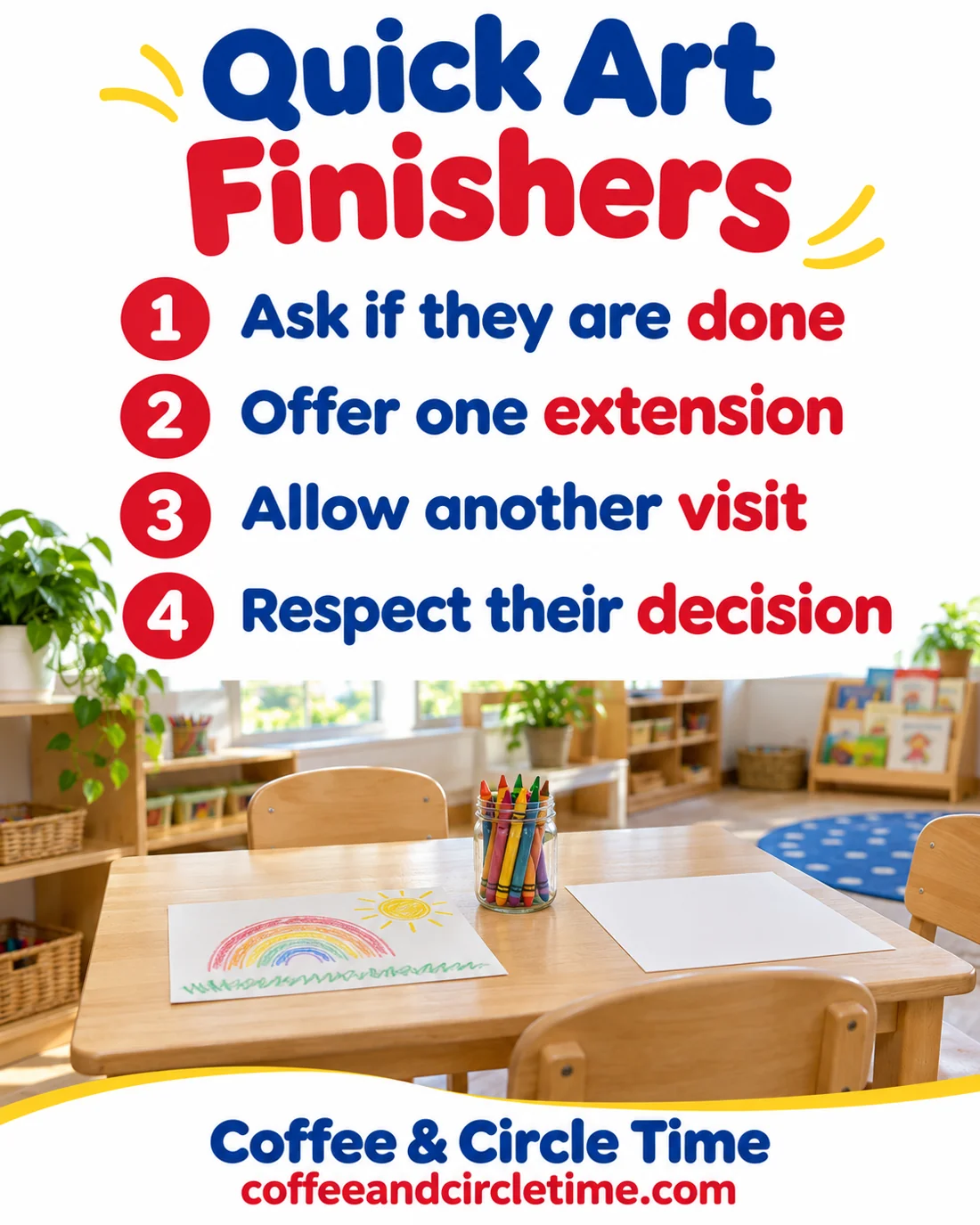
Offer one extension
Place an additional suitable tool beside the original materials or offer another color. Explain it as a choice rather than the next required step.
For a drawing invitation, a second sheet might be enough. For collage, the child might choose to arrange pieces on a different background.
An extension should open another possibility without declaring the first piece unfinished.
Avoid adding decorations for the sake of time
More materials do not automatically create more meaningful exploration. A child who already feels finished may simply attach whatever you suggest to satisfy the adult.
Do not require a border, background or name decoration unless that action serves the learning purpose you planned.
If you need a predictable group routine, create a clear place children can go afterward rather than using extra art steps as a waiting system.
Make returning possible
When the schedule allows, let children return to an invitation later. Some prefer short visits with time to see what others are doing.
Explain whether the work can stay available or needs to move to a drying area. A simple visual cue can help everyone know what is still being used.
Keep returning optional. Repeatedly bringing a child back to add more can make the invitation feel like a correction.
Look at the level of choice
An activity with one adult selected outcome may be quick because there are few decisions to make. Open materials can allow more investigation.
Try removing a template and letting children decide what to create with the same supplies. Keep safety and tool instructions clear.
You can still provide structure through the materials, space and cleanup routine without prescribing the picture.
Plan the transition away
Show the child where to place their work and which available activity comes next. Keep the transition manageable for the staffing and room arrangement.
If many children leave at once, review whether the art group is too large or the setup needs changing. The answer may be a smaller invitation rather than more steps.
Record what drew children back and what they ignored. Use those observations to plan the next session instead of measuring success only by minutes at the table.
Offer room for deeper exploration while respecting a child’s decision that their work is complete.

Leave a Reply