
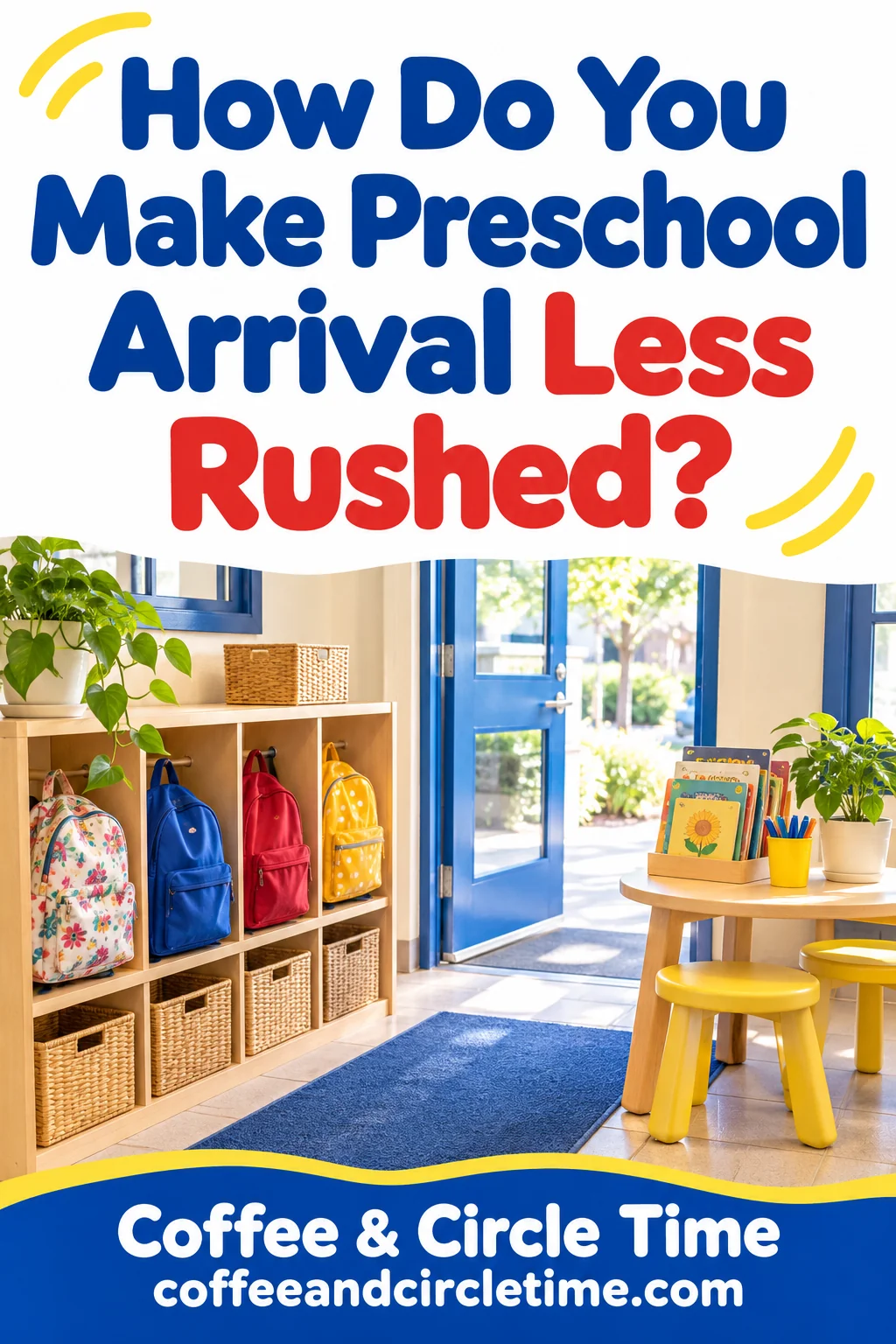
Prepare a consistent first activity, make belongings easy to put away and agree on adult roles before families arrive. A calmer arrival comes from reducing decisions at the door rather than expecting every family to move at the same speed.
Build a reliable first sequence and leave room for individual support within it.
Hi, I’m Ms. Jenn, a preschool teacher with 20 years of experience. I currently teach in a two year old classroom and share practical ideas from everyday teacher life here at Coffee and Circle Time.
When a child misses their parents, one thing I use in my classroom is our family tree. I help them focus on it as a familiar connection to their family.
This is one of the ways I support a child who is missing home. I would still respond to the individual child rather than expect the same approach to suit everyone.
Set up the first few minutes
Choose a familiar invitation children can enter with limited explanation. It should fit the space, age group and supervision available during arrival.
Avoid starting with an elaborate activity that needs one adult’s full attention while others are still entering. The opening task needs to work alongside greetings and handoffs.
Keep the same basic sequence visible: greet, manage belongings and move into the room. Use your classroom’s existing visual supports.
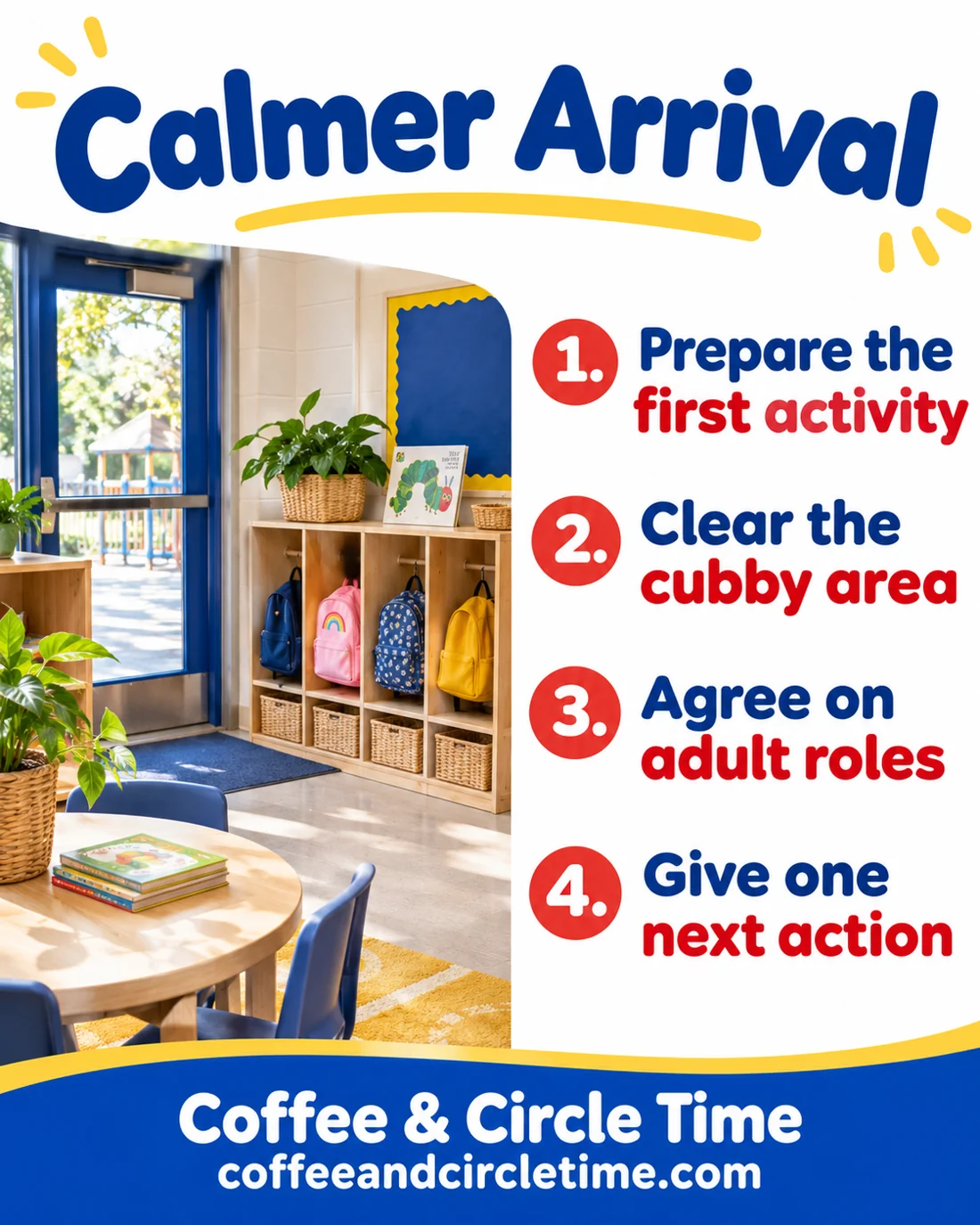
Prepare the practical landing places
Check that the designated places for bags, coats and messages are ready. A blocked cubby area can create a queue before the day has begun.
Keep family information in the school’s approved communication system. The doorway is not a suitable place to leave confidential notes visible to others.
Make the first actions easy to find so children do not need a fresh set of instructions every morning.
Agree on adult roles
Discuss who greets families, who supervises the room and how information is passed on. Follow your program’s attendance and sign in procedures.
When staffing changes, explain the arrival routine to the covering adult before the first family appears. Do not assume everyone uses the same signals.
If one adult must manage several tasks, simplify the activity choices and ask the appropriate leader to review any supervision concerns.
Keep greetings warm and brief
Use the child’s name and a clear invitation into the room. A familiar phrase can help them recognize the sequence without making the greeting feel mechanical.
In my classroom, I make what we are doing sound exciting and keep saying goodbye to a parent positive. I greet the child by name and invite them to join the activity happening at that moment.
I say, “Good morning, [child’s name]! Come do [activity]!” Once they come over, I say, “Okay, say byeeee, Mommy!” or “Okay, say byeeee, Daddy!”
Acknowledge a family’s message and arrange a better time or approved channel for a longer conversation. You can be attentive without holding a private discussion in a busy doorway.
Avoid comparing families who arrive quickly with those who need more support. Their circumstances may be different.
Support the child’s next action
Point to one manageable step rather than giving several directions. A child who needs help can begin by choosing where to place a familiar item or joining an available activity.
Keep separation support consistent with the plan your setting and family use. Do not promise a family member will return at a time you cannot confirm.
If distress continues, record objective observations and work through your school’s support process rather than improvising a new approach every day.
Review the busiest point
Notice where the room becomes crowded or adults have to repeat information. That location often identifies the next useful change.
Try moving a supply, simplifying a choice or changing the handoff wording within school procedures. You do not need a complete classroom redesign.
A calm arrival does not mean every child is immediately happy. It means adults know the plan and children receive predictable support.
Build a reliable first sequence and leave room for individual support within it.

Leave a Reply