
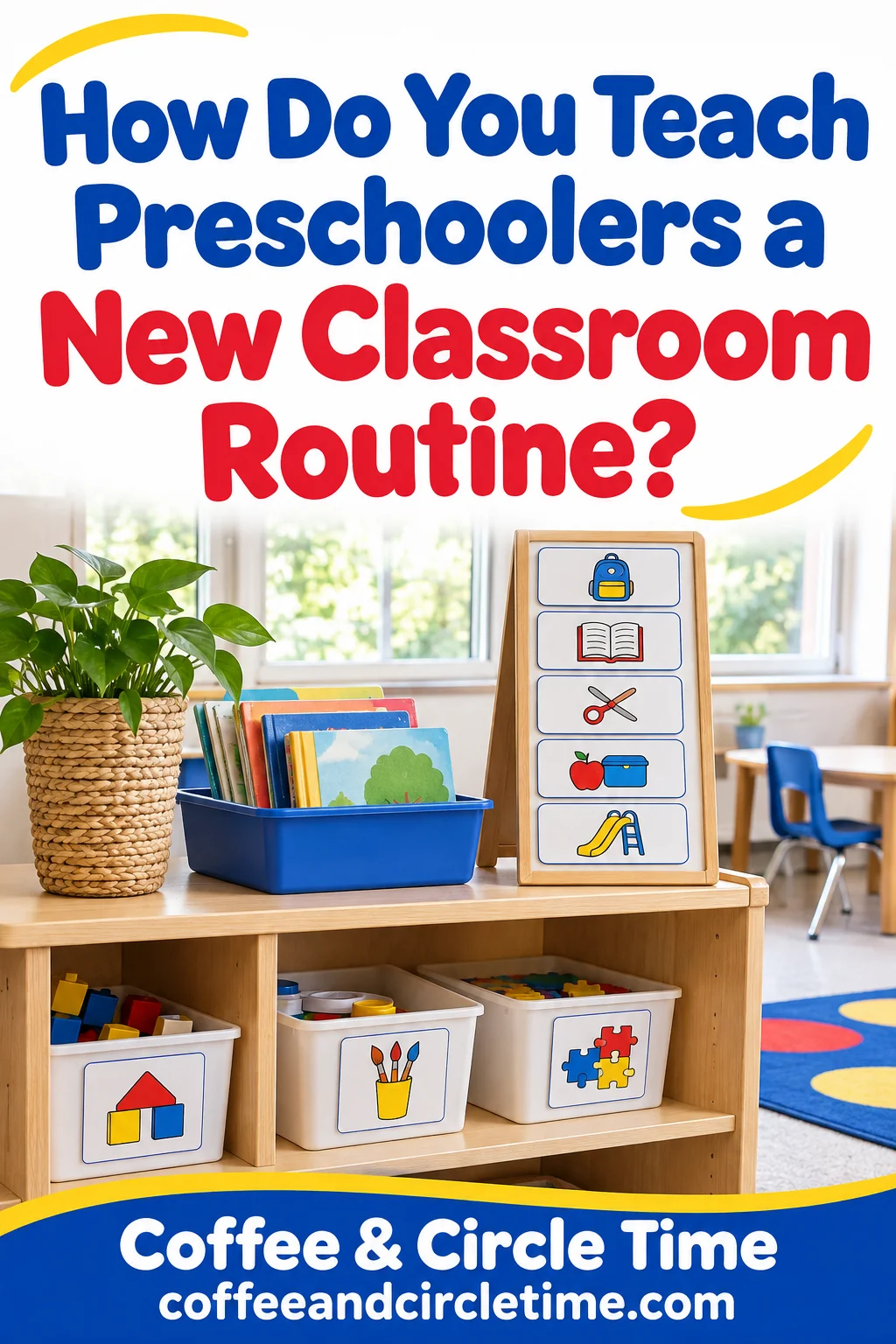
Teach a new routine during a calm moment, model the actual steps and practice with support before expecting independent use. Keep the words, materials and adult responses consistent while children learn what to do.
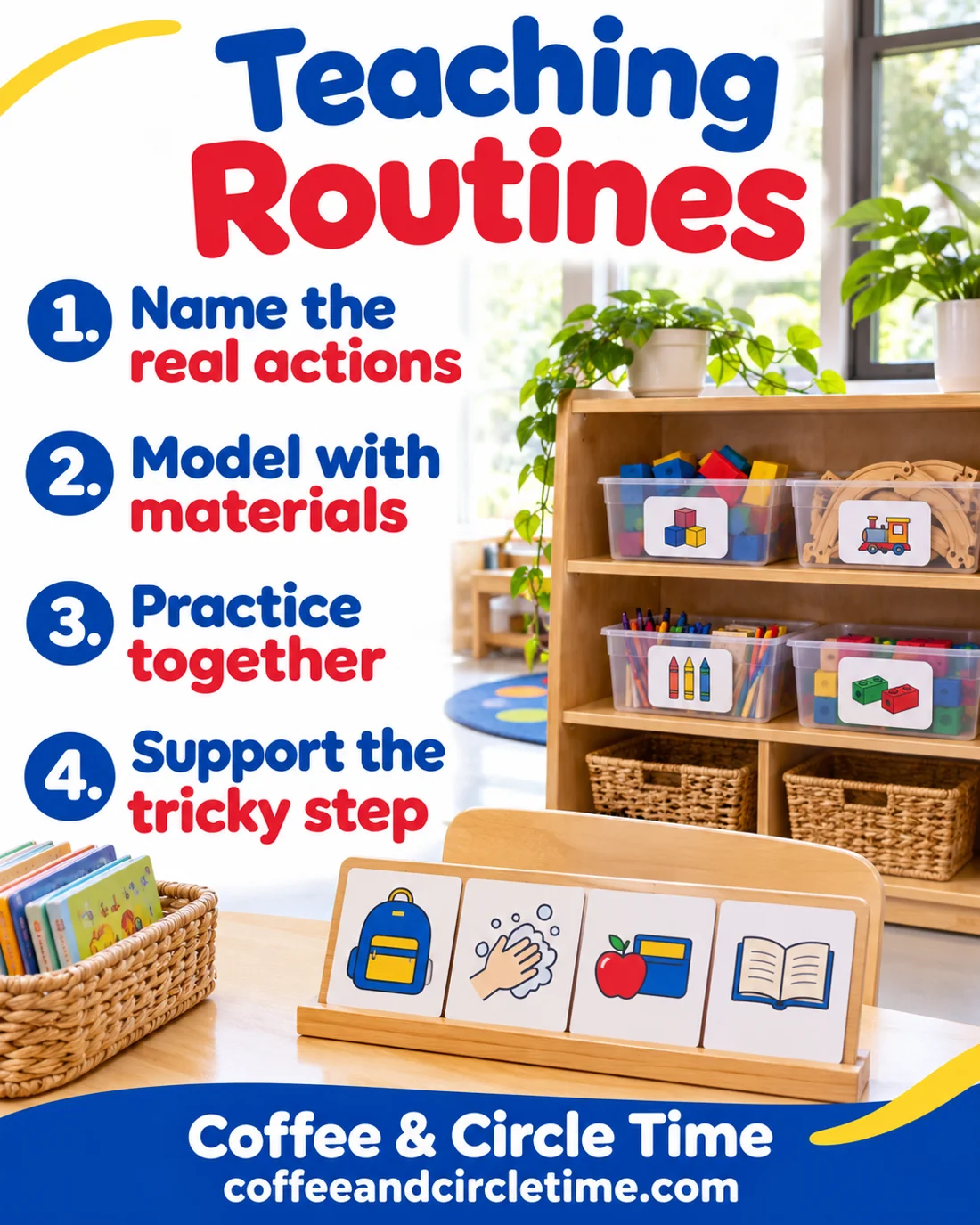
Model the real sequence, practice it together and support the step that is still being learned.
Hi, I’m Ms. Jenn, a preschool teacher with 20 years of experience. I currently teach in a two year old classroom and share practical ideas from everyday teacher life here at Coffee and Circle Time.
Define the routine in actions
Write the sequence as things children can see and do. “Return the book, choose another and sit in the reading area” is clearer than “Use the library nicely.”
Keep the first version short. If your explanation includes several exceptions, decide which ones children actually need on the first day.
Check the environment as well as the words. A routine that depends on an unreachable shelf needs a setup change before a lesson.
Choose a calm teaching time
Introduce the routine before the busy moment when it will be needed. Children have more room to notice the steps when they are not already managing a transition.
Gather a small group if that fits the teaching goal and supervision. A whole group demonstration is not the only option.
Explaining a routine once is the beginning of teaching it, not evidence that every child can use it independently.
Model with the real materials
Use the actual container, shelf or visual cue children will encounter. Show the first step, pause and demonstrate what follows.
Keep the language concrete and brief. Describe the action rather than giving a speech about why everyone needs to listen.
If you show a mistake, keep it simple and avoid making the incorrect action more entertaining than the routine itself.
Practice with help
Invite children to try the sequence with an adult nearby. Offer prompts at the point they are needed instead of listing every reminder in advance.
A child may understand one part and still need help with another. Identify that specific step rather than restarting the entire lesson each time.
Use visual supports or accessible alternatives already appropriate for the child and your setting. The same expectation may need different support.
Keep adult responses consistent
Agree with your teaching partner about the main wording and what happens when a step is missed. Mixed directions can make the routine seem unpredictable.
Give covering adults a brief description of the sequence. A familiar routine can change quickly when a substitute unknowingly uses different expectations.
Consistency does not mean ignoring individual needs. It means the overall sequence is reliable while support can be adjusted.
Review and revise
Observe the step where children most often stop or ask for help. Look for a practical barrier before assuming they are choosing not to follow the routine.
Change one element, teach the change and watch again. You may need a clearer label, fewer materials or a shorter waiting period.
Describe successful actions specifically and calmly. The aim is a usable classroom routine, not constant adult commentary about who is doing it best.
Model the real sequence, practice it together and support the step that is still being learned.

Leave a Reply