
Include the current schedule, essential classroom routines, staff contacts and the location of required school procedures. Keep sensitive information in the school’s approved system and make clear how an authorized substitute can access it.
Make essential information easy to find while keeping official procedures and privacy requirements in place.
Hi, I’m Ms. Jenn, a preschool teacher with 20 years of experience. I currently teach in a two year old classroom and share practical ideas from everyday teacher life here at Coffee and Circle Time.
Start with the school’s requirements
Ask which substitute materials your program already provides and what must stay in the official system. Your folder should support those procedures rather than replace them.
Confirm how covering staff receive emergency, attendance and child specific information. Do not make a personal copy simply because it feels convenient.
A useful folder points to current authoritative information instead of becoming a second version that may go out of date.
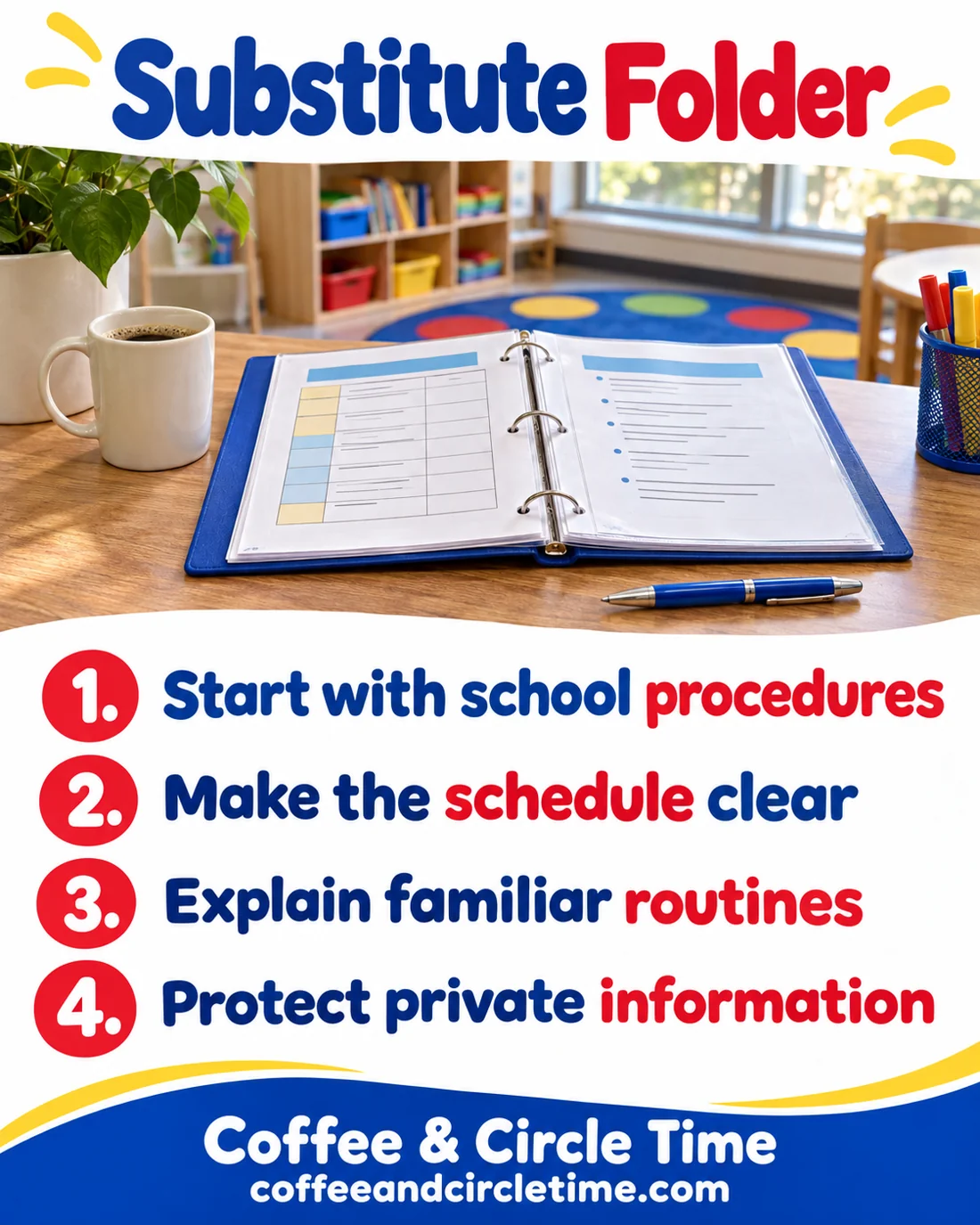
Make the first page practical
Put the day’s basic schedule and where to ask for help near the front. Include the classroom location and relevant staff roles using approved contact details.
Highlight any change affecting that particular day. A regular schedule alone may not explain a visitor, room move or special event.
The first page should help a substitute begin safely and find support quickly.
Explain the routines that are not obvious
Describe where materials are returned, how children enter activities and which familiar cues the class uses. Keep the wording brief and concrete.
Include adult responsibilities during transitions where appropriate. A list of children’s expectations does not tell a substitute what their own role is.
Avoid a long collection of personal preferences that hides the essential sequence. Distinguish helpful tips from required procedures.
Offer a manageable activity plan
Choose familiar materials and activities that fit the substitute’s supervision responsibilities. Include where to find supplies and how to put them away.
Do not leave a complicated new project requiring knowledge only you have. A straightforward invitation can support a smoother day.
Provide an approved alternative if the planned activity cannot happen. Keep that alternative simple enough to use without extra shopping or preparation.
Protect private information
Follow your setting’s rules for storage and access. Do not leave medical details, family circumstances or personal contact lists in an openly accessible folder.
Explain how authorized staff obtain required information and whom to contact with questions. Never rely on children to communicate their own confidential support needs.
Use factual, respectful language in any approved notes. Labels about a child’s personality are less useful than clear information about support and routines.
Maintain the folder
Add a review date and remove obsolete pages when the schedule changes. Check that the named staff roles and locations are still correct.
Ask covering staff which information was difficult to find. Use that feedback to shorten or reorganize the folder.
A substitute folder is a working resource. Clear, current pages are more useful than a large binder that has not been reviewed.
Make essential information easy to find while keeping official procedures and privacy requirements in place.

Leave a Reply