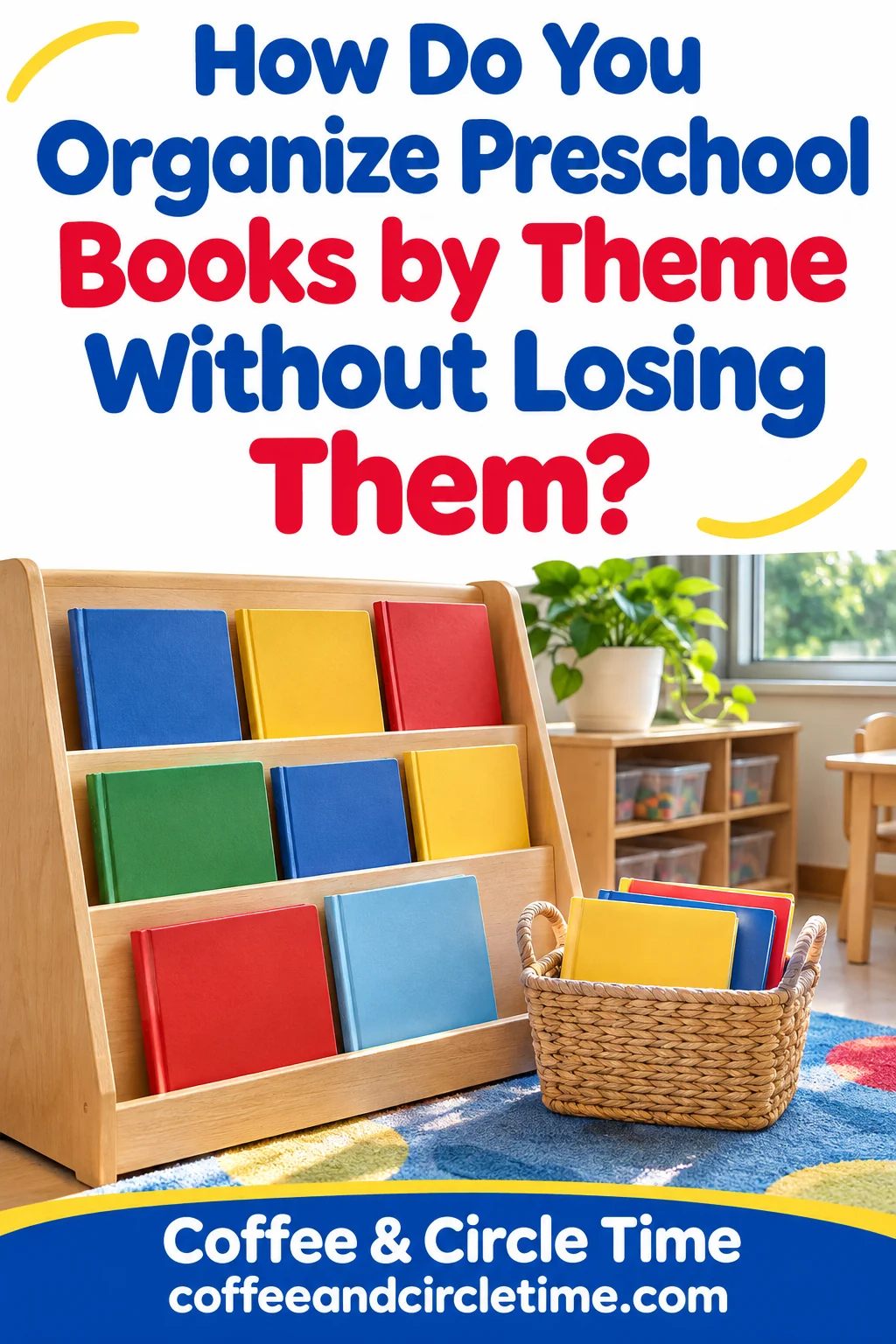
Keep one main home for books, label temporary theme collections and record where borrowed classroom books have moved. You can group books for planning without creating several storage systems that compete with one another.
Give books one reliable home and make temporary moves easy to reverse.
Hi, I’m Ms. Jenn, a preschool teacher with 20 years of experience. I currently teach in a two year old classroom and share practical ideas from everyday teacher life here at Coffee and Circle Time.
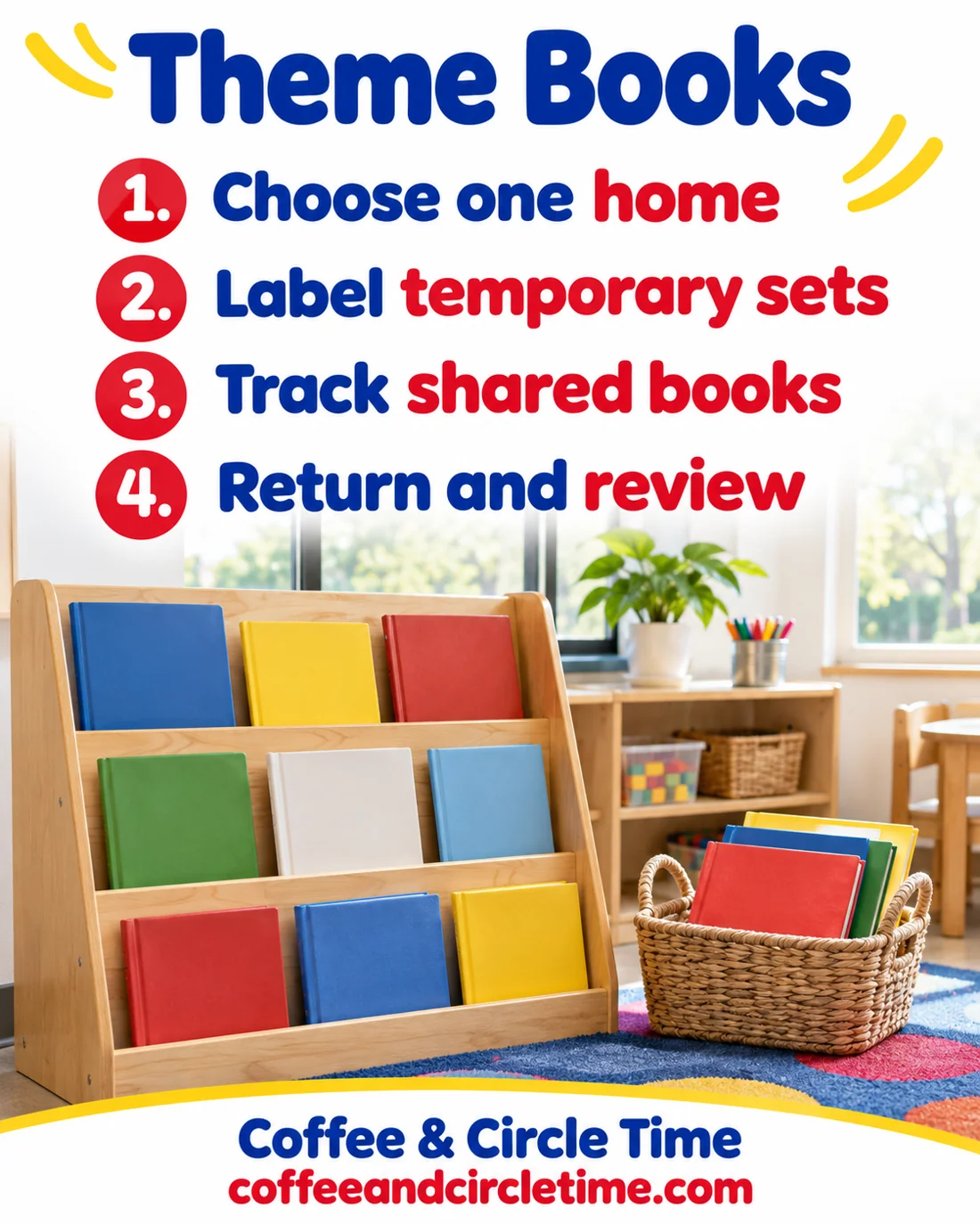
Choose a main home
Decide where books return when a theme ends. The location should be clear to every adult who manages the collection.
Use categories broad enough to maintain. An extremely detailed sorting system can become difficult when one book fits several topics.
Separate library loans or other borrowed items according to your setting’s procedures so return dates remain visible.
Label temporary collections
Give the active theme tray or shelf a simple label. Put the planning period or return point on an adult note if that helps.
A book about gardens may also fit colors, insects or seasons. Choose one home for storage and use your planning list to remember other connections.
A book can serve several teaching purposes without needing several physical storage locations.
Keep the classroom selection manageable
Display a useful selection rather than every related book. Leave space for children to see covers and return books appropriately.
Rotate based on interest and condition. You do not need to replace the entire reading area whenever the planning theme changes.
Keep familiar favorites available where possible. A theme collection can add variety without removing every book children already enjoy.
Track movement simply
Use a short checkout note for adult planning collections if books move between classrooms. Record the title, destination and expected return in the approved shared system.
Avoid building a complex catalogue unless your setting needs one. A small collection may only need a clear label and reliable return routine.
If several adults use the books, agree on the same process. A private list does not help someone who cannot access it.
Check condition during return
Look for damage and follow your school’s repair or removal procedure. Keep items needing attention separate so they are not accidentally returned to use.
Return each theme collection before starting the next where practical. Mixing two half sorted sets is how books gradually lose their homes.
Make a brief note about books children requested again. That is useful planning information, not a reason to keep the whole theme tray out indefinitely.
Review categories occasionally
If a section is consistently overflowing, broaden or split it in a way the team can maintain. Explain changes to everyone who uses the collection.
Remove labels that no longer describe the actual storage. The system should reflect the shelves as they are now.
Start small if the collection is disorganized. Restoring one clear home for active books can be more useful than attempting a complete library overhaul in one afternoon.
Give books one reliable home and make temporary moves easy to reverse.

Leave a Reply