
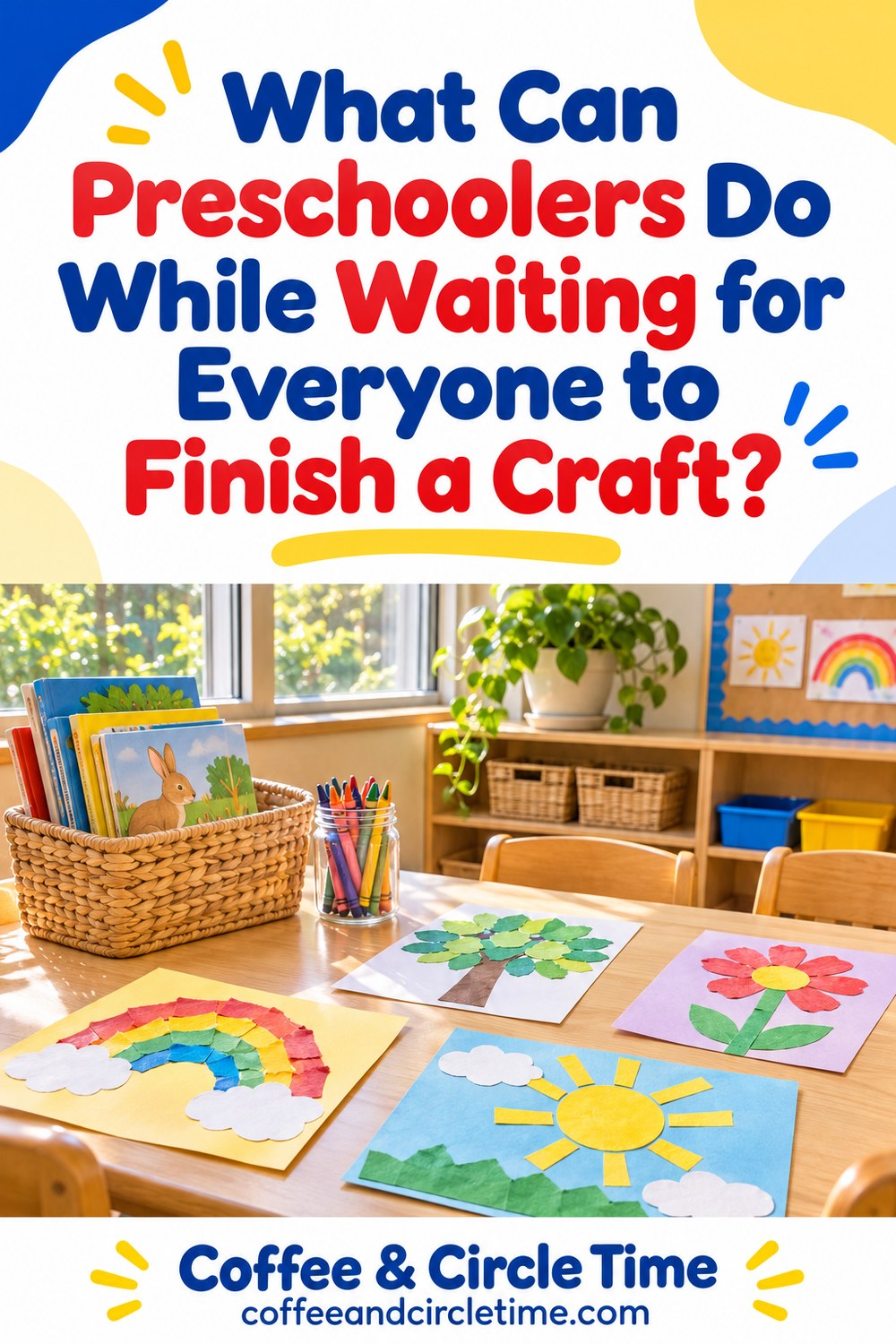
Preschoolers who finish a craft early can move into a familiar, supervised choice such as looking at books, drawing, or using a simple classroom activity that is already available. Plan the next step before starting the craft so children know what happens when their work is finished.
Children do not all need to finish at the same time before anyone can move on.
Hi, I’m Ms. Jenn, a preschool teacher with 20 years of experience. I currently teach in a two year old classroom and share practical ideas from everyday teacher life here at Coffee and Circle Time.
A few children may spend a long time exploring the materials, while others decide they are done quickly. You can make room for both without giving early finishers another version of the same project.
The most useful waiting option is one that fits your classroom, the children using it, and the supervision you can maintain while helping the rest of the group.
Decide whether the children need to wait at all
Look at the reason behind the waiting. Are you moving everyone to lunch, sharing one cleanup area, or simply used to keeping the whole group at the table?
If there is no practical reason for everyone to remain seated, consider a gradual transition. Children can finish, follow the cleanup steps, and move to an approved nearby choice.
That does not mean sending children wherever they want without a plan. You still need to know where each child is and how the next area will be supervised.
A familiar activity near the craft area may be easier to manage than opening several centers across the room. Choose the arrangement using the actual room and staff available.
If the whole group must move together soon, keep the waiting choice simple enough to end without creating another long transition. A short book or a small drawing area may fit better than a project with many materials.
Start by reducing unnecessary waiting before adding activities to fill it.
Give children a clear finishing sequence
A child may finish the art but still need help knowing what to do with wet paper, leftover materials, and a chair. Teach those steps separately from the craft instructions.
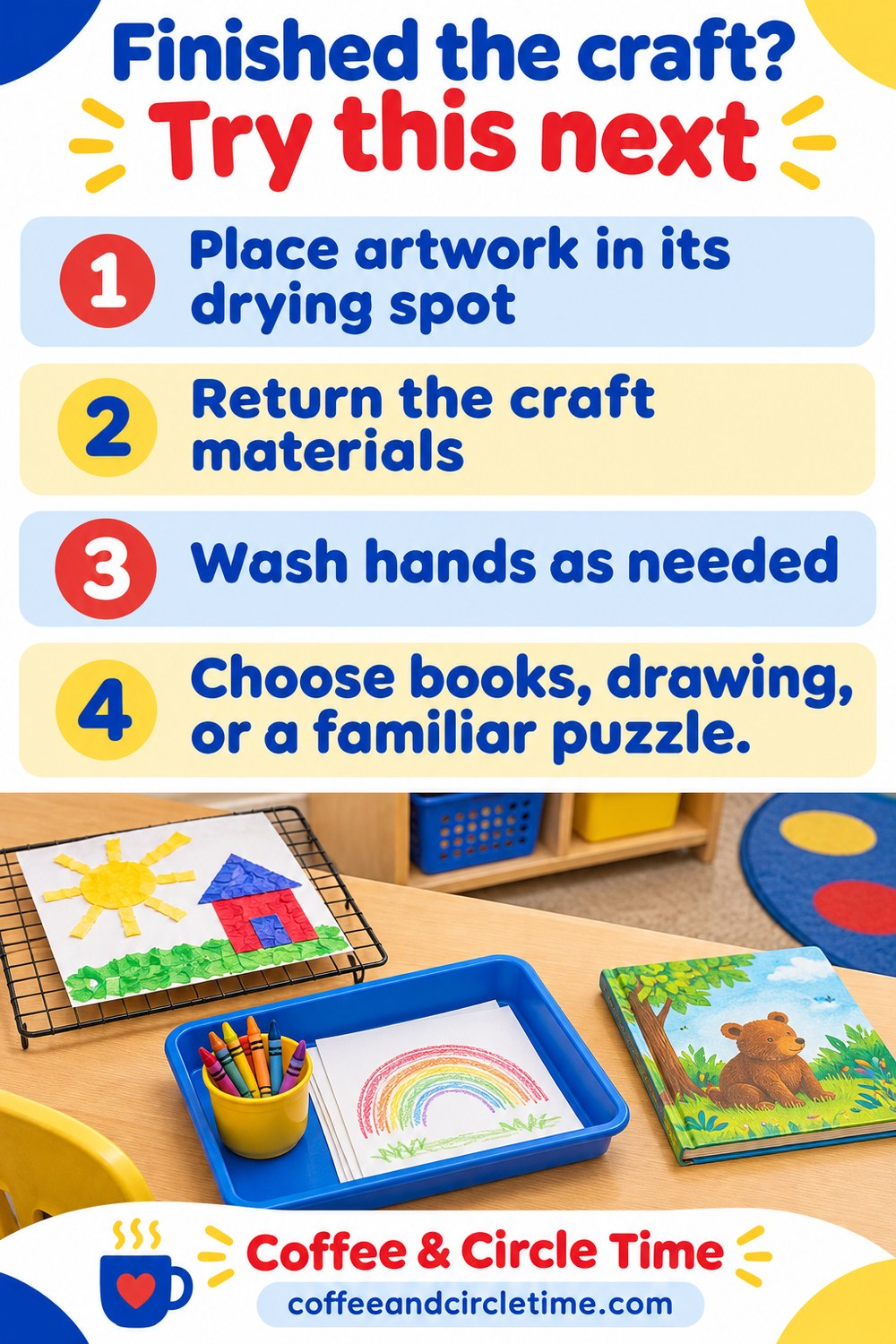
For example, the sequence could be placing the artwork in its drying spot, returning the materials, washing hands as needed, and choosing a book. Match the steps to your classroom routine.
Show the sequence before children begin. A few pictures can help children remember where finished work belongs and which choices are open.
Use the same simple language when someone announces they are done. “Put your picture in the drying space, then choose a book” gives a clear next action.
Avoid introducing several new rules while you are helping another child with paint or glue. Practice the routine during a less crowded moment so children have a chance to learn it.
A finishing sequence is especially useful when materials need to stay at the craft table. Children can leave the supplies behind instead of carrying an open glue bottle into another area.
Offer books as a familiar nearby choice
A small collection of sturdy, age appropriate books can work when children already know how to use and return them. Choose a location that keeps the children visible.
The books do not have to match the craft theme exactly. A few familiar favorites may be easier for children to settle into than a new collection that needs an explanation.
Consider how many children may finish close together. If there are only two places to sit, have another clear option ready instead of letting a crowd build around one chair.
You can invite a child to look at the pictures or tell a story to a willing friend. Reading time does not need to become a test about the artwork they just made.
Keep the materials accessible and easy to return. The goal is a choice children can begin without waiting for you to distribute something else.
An early-finisher choice should require less adult setup than the activity you are still helping with.
Let drawing remain a real choice
Plain paper and familiar crayons can give children something open ended to do when they want to keep creating. They can draw a new picture instead of adding to a craft they consider complete.
Set out only the amount of material the space can manage. A small supervised drawing spot may be more practical than opening another table with paint and glue.
You do not need to give every child a matching worksheet. A child who wants to draw a truck after making a seasonal craft can still be using the time meaningfully.
NAEYC’s guidance on process focused art emphasizes children’s choices and exploration. That is a useful reminder when deciding whether an early finisher really needs another adult directed product.
You can read more in NAEYC’s guide to process focused art experiences. Use the ideas to leave space for children’s own decisions about their work.
Use an established classroom activity when it fits
A familiar puzzle, a drawing board, or another approved table activity may work if children already know the expectations. Choose materials appropriate for the particular children using them.
Think about setup, noise, space, and cleanup. An activity can be enjoyable but still be a poor fit for a brief transition beside wet artwork.
Avoid introducing a brand new game while several children still need hands on help. The early finishers may end up waiting for instructions instead of moving into an independent choice.
If an activity normally needs close adult support, do not assume it becomes independent because a child has finished the craft. Plan for the supervision each activity actually requires.
You can also keep only one choice open at first. Add another when the routine is familiar and the room can support it.
Choose activities children can use within the supervision you already have available.
What if a child says they are done after one minute?
Check what the child means before deciding that they rushed. They may have completed their idea, become uncomfortable with a material, or need help with a step.
Ask a simple question such as “Are you finished, or is there something you want help with?” Give the child room to explain or show you.
If a skill is the purpose of the activity, offer an appropriate way to practice it without taking over the finished product. A child can try a tool on scrap paper, for example, rather than being required to decorate every empty space.
If the child is finished, follow the established finishing routine. More marks, more glue, or more decorations do not automatically make the experience more valuable.
Notice patterns over time. If many children leave quickly, review whether the activity, materials, group size, or amount of adult direction fits the group.
The answer may be changing the activity next time rather than making every child remain at the table longer.
Keep early finishers from interrupting the remaining group
Teach children where they can find help with the next choice and what they can do while you finish supporting someone else. Keep the expectation realistic for their ages and needs.
You might show them two familiar options and where each belongs. Avoid presenting a long menu that needs repeated explanations.
When a second adult is available, agree on who is supporting each area. Do not rely on an unspoken assumption that someone else is watching the children who leave the table.
If you are working alone, keep the setup within the space you can actively supervise. Follow your program’s procedures when changing groups or moving children between areas.
For more on watching the room during transitions, see Head Start’s active supervision guidance. The room arrangement matters as much as the choice itself.
Prepare one simple option for your next craft
Before the next activity, decide where finished work goes, what cleanup looks like, and which supervised choice opens afterward. Prepare that area before putting craft supplies on the table.
Then explain the sequence in a few clear steps. Use the same words when the first child finishes.
Afterward, notice whether the choice reduced waiting or created another problem. You may need more space, fewer supplies, or a clearer place for artwork to dry.
A calm finishing routine can let one child keep creating while another moves on.
Begin with one familiar option and a clear transition. You can build from what works in your own classroom instead of preparing an extra craft every time.

Leave a Reply