
Learn preschoolers’ names by using them naturally throughout the day, checking pronunciation with families, and practicing with the classroom’s approved name tools. Connect each name with ordinary interactions instead of trying to memorize the entire group from a list in one sitting.
Getting a name right is part of helping a child feel recognized in the classroom. Speed is useful, but accuracy and care matter more than pretending you remember a name you are unsure about.
Hi, I’m Ms. Jenn, a preschool teacher with 20 years of experience. I currently teach in a two year old classroom and share practical ideas from everyday teacher life here at Coffee and Circle Time.
Whether you are new to the classroom, covering for another teacher, or welcoming a new group, a simple routine can help. You can practice without turning the children into a memory quiz or making your uncertainty their responsibility.
Start with the name the child actually uses
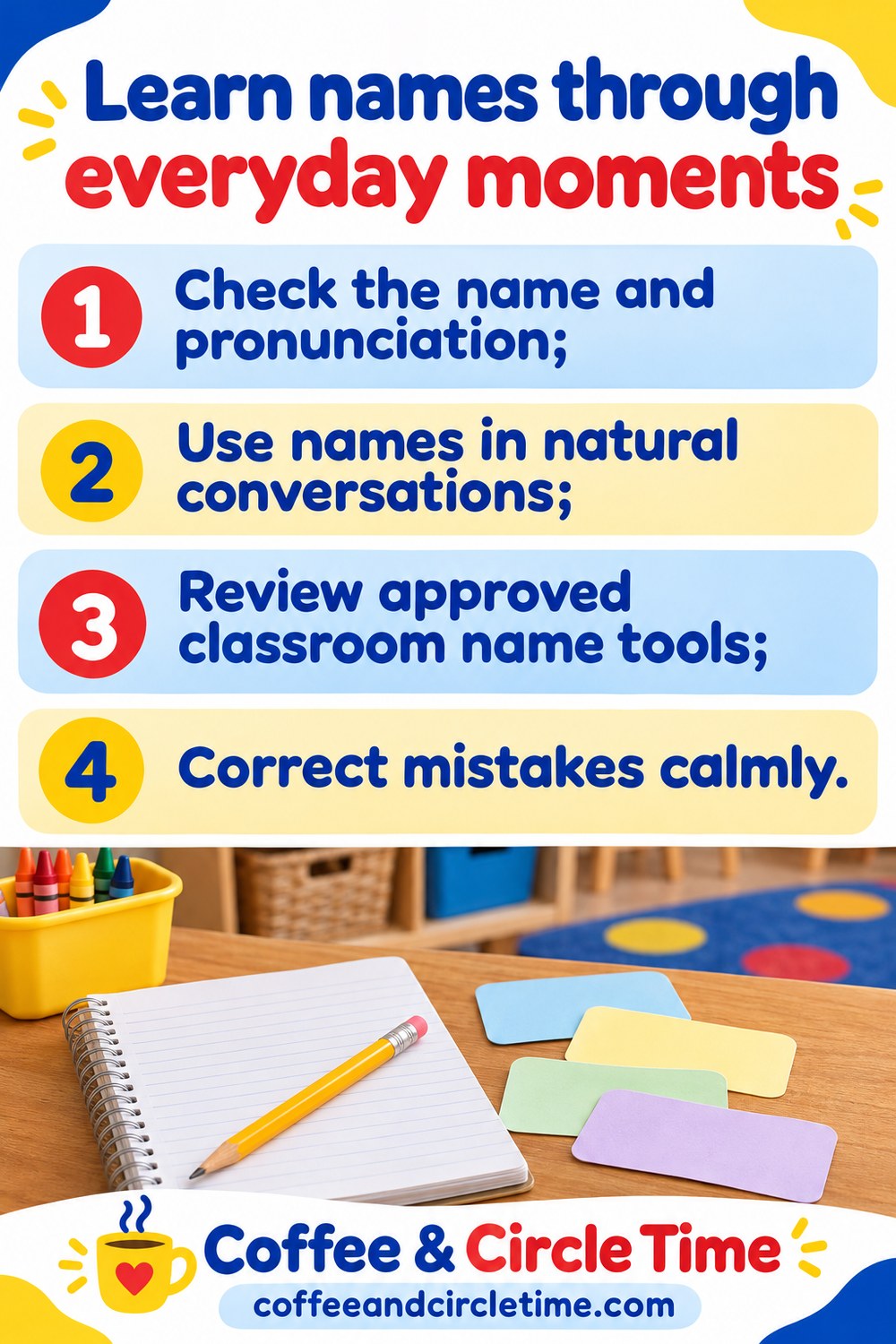
Check the classroom records and ask the family what name the child goes by. A registration name, nickname, and the name printed on a backpack may not all be the same.
Ask how to pronounce the name and listen carefully to the answer. If you need to hear it again, a calm request is better than choosing your own approximation.
Repeat the name back so the family can correct you. Thank them and use the correction without making a long speech about how difficult the name is.
Keep any notes within your program’s approved system. Avoid creating personal lists on an unapproved device just because it feels convenient during a busy first week.
Practice a few names at a time
An entire class list can feel overwhelming when every name is new. Begin with the children you are welcoming at arrival, then build your familiarity through the next part of the day.
Look at the child, say their name, and connect it with the interaction happening now. “Good morning, Maya; your cubby is ready” gives the name a real context.
During the next interaction, try recalling the name before checking the classroom label. Correct yourself promptly if needed rather than repeating the wrong name several times.
You do not need to announce that you are working through a memorization method. To the children, these can simply be warm, ordinary conversations with their teacher.
Use classroom labels as reminders
Cubbies, attendance cards, and place labels can provide useful name cues when they are part of the program’s usual setup. Take a moment to read them while helping with the routine.
Check that the label belongs to the child in front of you. Borrowed belongings and moved seats can make a quick assumption unreliable.
If the classroom uses approved photographs with names, review them through the school’s normal materials and privacy practices. Do not copy children’s photos into a personal app or send them to an outside service for memorization help.
Use the tools the classroom already provides before creating a separate system full of children’s information. That keeps your practice connected to the place where you need to use the names.
Say names during meaningful exchanges
Use a child’s name when inviting them into a conversation, acknowledging an idea, or helping with a routine. The repetition is easier to remember when it belongs to something that happened.
You might say, “Leo, you noticed the tower leaning,” or, “Amira, would you like the paper here?” Keep the interaction directed to the child rather than speaking about them as if they are not present.
Avoid repeating a name unnaturally in every sentence. Children do not need to hear a rehearsed script each time you help them wash their hands.
Also notice when you use names most often. If a child’s name only comes out during corrections, look for ordinary opportunities to greet them and respond to their interests.
Use a short welcome routine
A familiar greeting song or daily welcome can give you another chance to hear and say each name. Keep it short and appropriate for the group rather than stretching circle time to serve your memory practice.
Give children different ways to respond if they prefer to wave, smile, or simply listen. They do not have to perform in front of everyone for their name to be included.
Check pronunciation before using a name in a song. A rhyme or melody should not become a reason to change the name into something easier for the adult to sing.
If a child is absent, follow the classroom’s usual way of acknowledging attendance. Do not turn an ordinary welcome routine into a discussion of private family information.
Ask a colleague for a quick check
An experienced teacher can help you confirm names and pronunciation during a quiet planning moment. Compare your understanding with the approved class list rather than guessing from memory together.
Ask specific questions such as, “Does he use Benjamin or Ben in class?” This is easier to answer than asking a colleague to repeat the entire group at the busiest part of arrival.
Agree on how to correct one another kindly if either adult mixes up names. A brief correction helps the child hear the right name without making the exchange awkward.
Keep the conversation respectful. Children should not hear adults joking about which names are hard, unusual, or impossible to remember.
Make connections without labeling children
It can help to remember a conversation you had with a child, such as the book you read together or a question they asked about the class plant. Use that as a memory connection for yourself.
Keep those connections flexible. A child who loved the train table on Monday is more than “the train kid,” and their interests may change.
Avoid using appearance, perceived background, or challenging behavior as the main way you identify children. Such shortcuts can lead to mistakes and turn into labels that follow a child unfairly.
Instead, build familiarity through repeated contact. Helping a child find a puzzle piece or hearing their story at snack gives you another chance to connect the person with the name.
Correct mistakes simply
If you use the wrong name, correct it and continue with the interaction. “I meant Nora; thank you for correcting me” is usually enough.
Do not insist that the child looks like someone else or that their name is easy to confuse. The child does not need to defend their identity to help you feel less embarrassed.
If you are unsure, ask rather than guessing loudly across the room. A direct, respectful question is better than avoiding the child’s name for the rest of the day.
A small correction handled calmly shows children that adults can make mistakes and listen. The useful next step is to practice the correct name, not to make the child reassure you.
Review names at a quiet time
At an appropriate planning moment, review the classroom’s approved list and think about the interactions you had. Notice which names you know confidently and which still need attention.
Choose a few to focus on during the next routine. This gives your practice direction without requiring you to rehearse every name every hour.
If you write a pronunciation reminder in an approved teacher resource, make it clear and respectful. Keep access and storage consistent with the program’s rules for information about children.
A short review before the next school day can help you begin arrival with more confidence. Leave room to ask again if you discover that your understanding was incomplete.
Build familiarity through consistency
You may learn some names quickly and need more repetition with others. Keep practicing without comparing children or making promises that you will remember everyone perfectly by a certain day.
Use the child’s name consistently across positive interactions, routines, and conversations. Each accurate repetition helps connect the name with the person you are getting to know.
If you are a substitute or visiting teacher, follow the room’s existing supports and ask for help when needed. Knowing where to verify a name is useful even before you can recall it independently.
The most effective name practice is respectful attention repeated throughout the day. Check what each child is called, learn the pronunciation, and use the name naturally as you build the relationship.
You do not have to turn the process into another elaborate classroom project. A clear list, careful listening, and many small conversations can give you a practical place to start.

Leave a Reply