
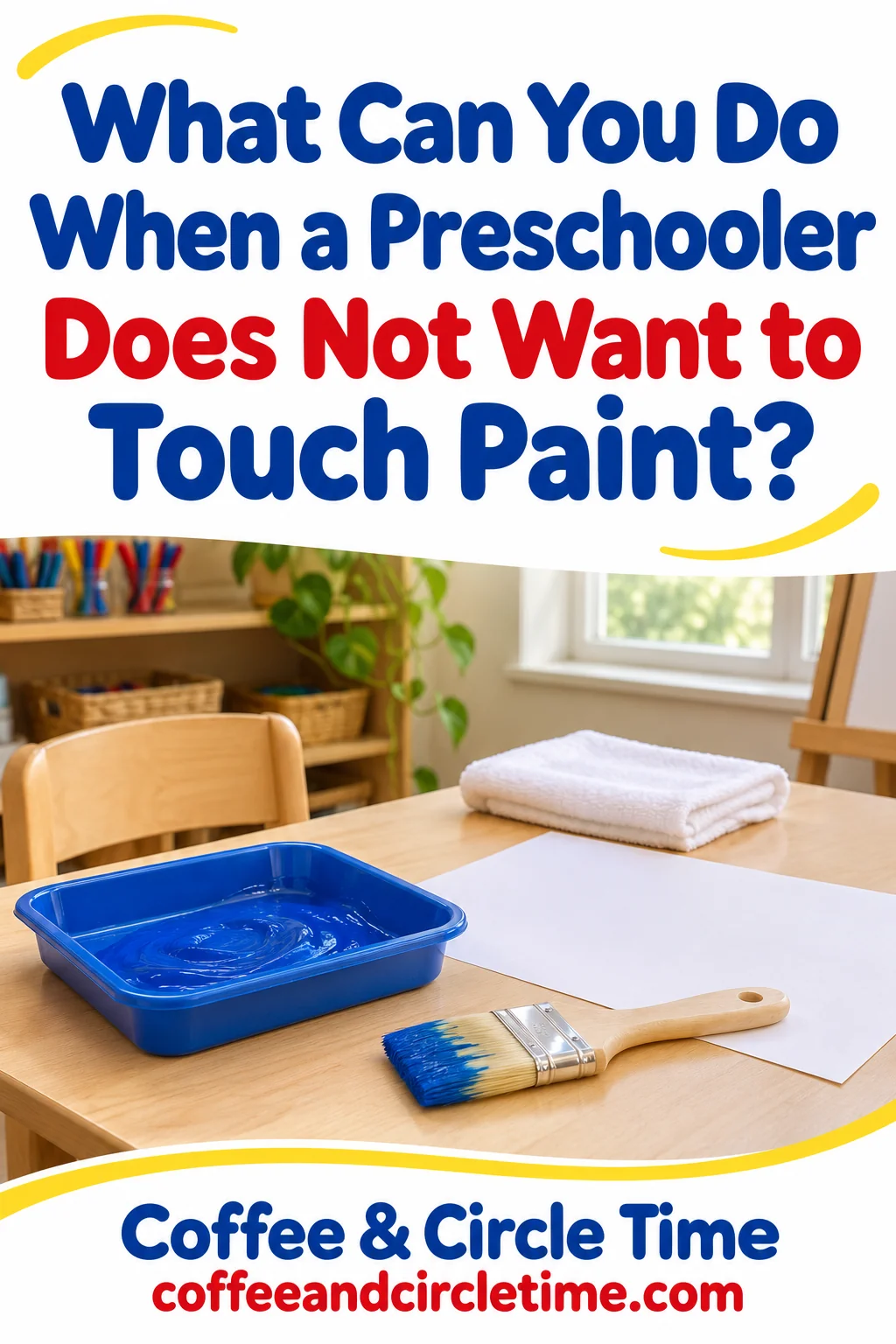
Offer a way to explore the activity without touching paint directly, such as a brush, a roller or watching first. A child can take part in art without finger painting, and refusing one texture does not mean they dislike creating.
Give children a comfortable way into the activity, and let participation grow without pressure.
Hi, I’m Ms. Jenn, a preschool teacher with 20 years of experience. I currently teach in a two year old classroom and share practical ideas from everyday teacher life here at Coffee and Circle Time.
Start by noticing what the child avoids
Pause before changing the whole activity. Is the child avoiding the wet paint, the smell, the crowded table or the expectation to make a particular picture?
A quiet comment such as “You can use this brush if you want” gives useful information without turning the moment into a public discussion. You do not need to identify a diagnosis to offer a different tool.
Keep your tone ordinary. Announcing that someone is afraid or making a mess can add pressure when the child is already unsure.
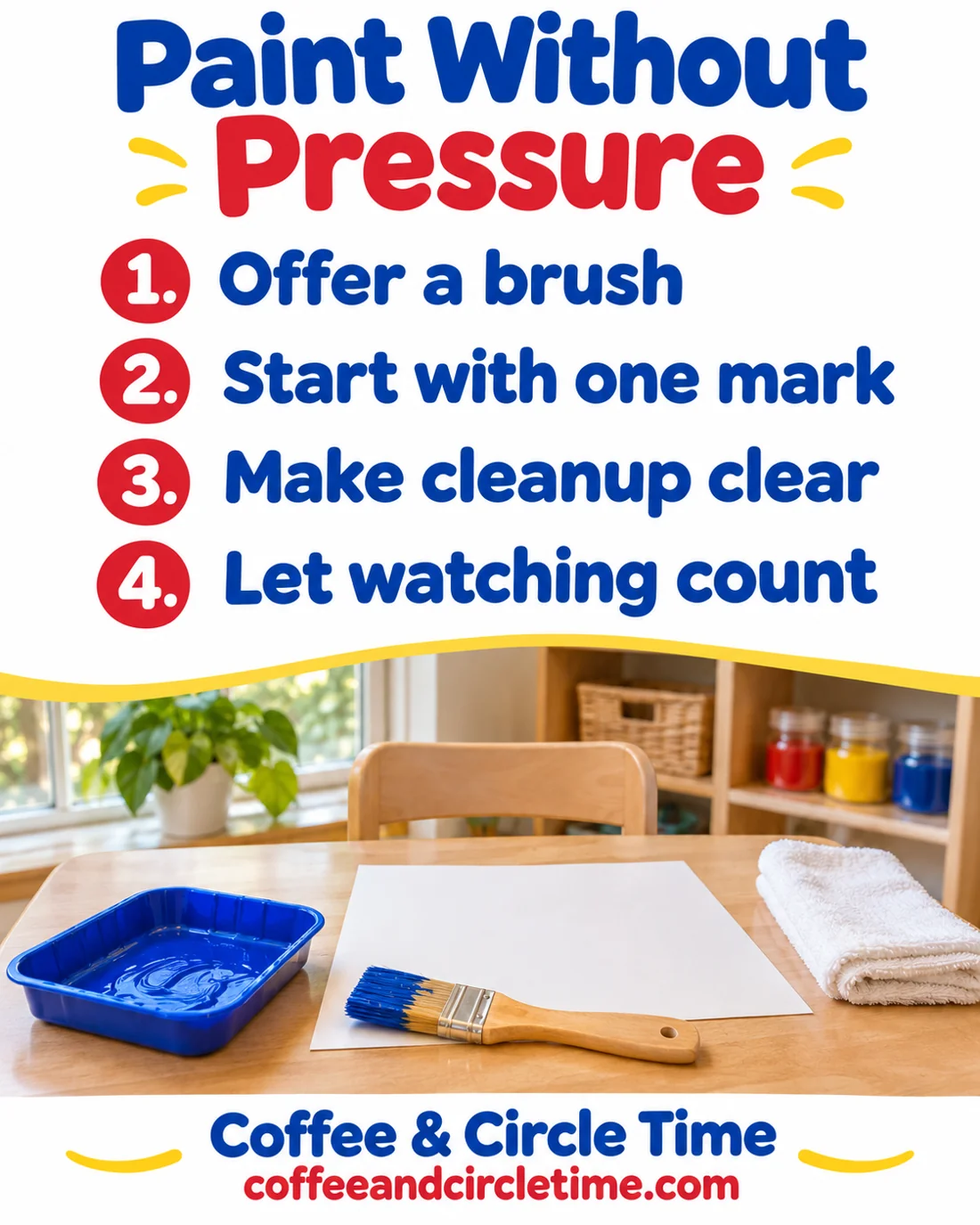
Offer a tool that creates distance
Put a wide handled brush beside the paper and demonstrate one small mark. Offer a roller or another age appropriate tool already approved for your classroom if it is available.
Keep the paint in a stable, shallow container so the tool is easy to reach. Avoid asking a child to reach across someone else’s work or put their hand into a shared bowl.
The alternative should be a real way to create, not a reward for eventually touching the paint.
Make the first step smaller
Offer a small piece of paper or a single color. A large blank sheet and several pots can feel like more decisions than the child wants to make.
You might say, “Would you like to make one mark here or watch me make one?” Accept the answer rather than repeating the invitation every few seconds.
A child who watches today may choose to join another day. Do not promise that one low pressure experience will change a preference immediately.
Keep cleanup predictable
Show the child where the handwashing area is before starting. Explain that hands can be washed when needed, while following your classroom’s supervision and hygiene routines.
Keep spare paper and an appropriate place for used tools ready. Knowing what happens after the painting can make the activity easier to understand.
Do not put paint on a child’s hands as a surprise or guide their hand into it against their wishes. Access to art should not depend on enduring unwanted touch.
Provide another way to meet the goal
If the aim is exploring color, drawing with crayons or choosing colored paper may also support that goal. If the aim is making a class display, accept a contribution in a different medium.
Avoid making a substitute task look like a punishment at a separate table. Keep the child connected to the group when the environment and supervision allow.
Check the materials for age suitability and follow product directions. An attractive household item is not automatically appropriate for classroom art.
Try one change and observe
At the next invitation, keep the setup familiar and offer the same successful tool. Notice whether the child chooses a mark, stays longer or asks for a different material.
If avoidance affects many daily activities or the child seems distressed, share factual observations through your school’s usual family and support process. Avoid labeling the child based on an art session.
For today, success might simply be choosing a brush and making one line. The finished picture is only one small part of what happened.
Give children a comfortable way into the activity, and let participation grow without pressure.

Leave a Reply