
Learn the essential supervision and school procedures first, then focus on the sequence of one part of the day at a time. Ask where current information lives and confirm responsibilities instead of trying to remember every detail from a quick introduction.
Learn essential responsibilities first and build familiarity one routine at a time.
Hi, I’m Ms. Jenn, a preschool teacher with 20 years of experience. I currently teach in a two year old classroom and share practical ideas from everyday teacher life here at Coffee and Circle Time.
Start with what cannot be guessed
Ask your supervisor or teaching partner about required procedures, how to obtain support and where authorized information is kept. Follow the training your role requires.
A general classroom schedule does not replace instructions for supervision, emergencies or child specific support. Ask when something is unclear.
Do not rely on children to teach you rules that adults are responsible for communicating.
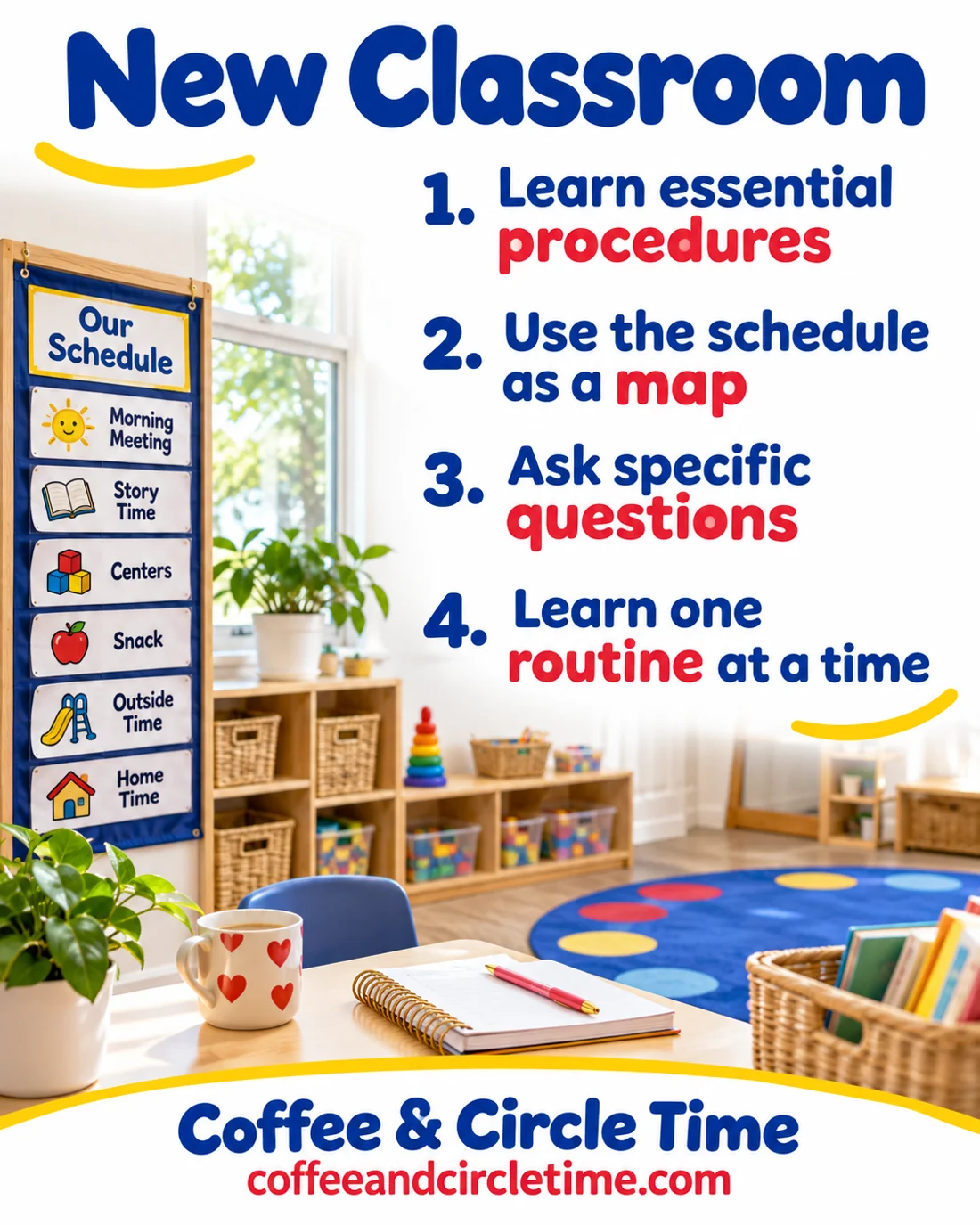
Use the schedule as a map
Identify the main parts of the day and the transitions between them. You do not need to memorize every song or optional activity immediately.
Ask which times usually need the most adult coordination. That helps you prepare questions before the busy moment arrives.
Knowing what comes next is useful, but knowing your responsibility during it is essential.
Learn one routine in detail
Choose the next routine you will support. Ask what happens first, where materials belong and what your partner expects you to manage.
Repeat the main sequence back in your own words. This can reveal a misunderstanding before you act on it.
Keep a brief approved note if helpful, without including confidential information in a personal notebook or device.
Observe before changing things
A setup that seems unusual may have a reason you have not yet learned. Ask about it before moving supplies or changing expectations.
You can notice practical problems without immediately redesigning the room. First understand how the current system works.
If you see an urgent concern, use the school’s reporting and support process rather than waiting to feel fully settled.
Ask specific questions
“Where do completed forms go?” is easier to answer than “How does everything work?” Keep questions tied to the action you need to take.
Choose an appropriate time for longer explanations. During active supervision, ask only what is needed to complete the immediate task correctly.
Make a short list of nonurgent questions for a planning conversation so you do not have to hold them all in memory.
Review after the first few days
Notice which routines are becoming familiar and where uncertainty remains. Request feedback on a specific responsibility.
Do not compare your first week in a room with a partner’s years of experience there. Familiarity takes repeated exposure to the actual schedule.
Use the school’s support and training resources. Learning the classroom is a shared process, not a test of whether you can figure everything out alone.
Learn essential responsibilities first and build familiarity one routine at a time.

Leave a Reply