
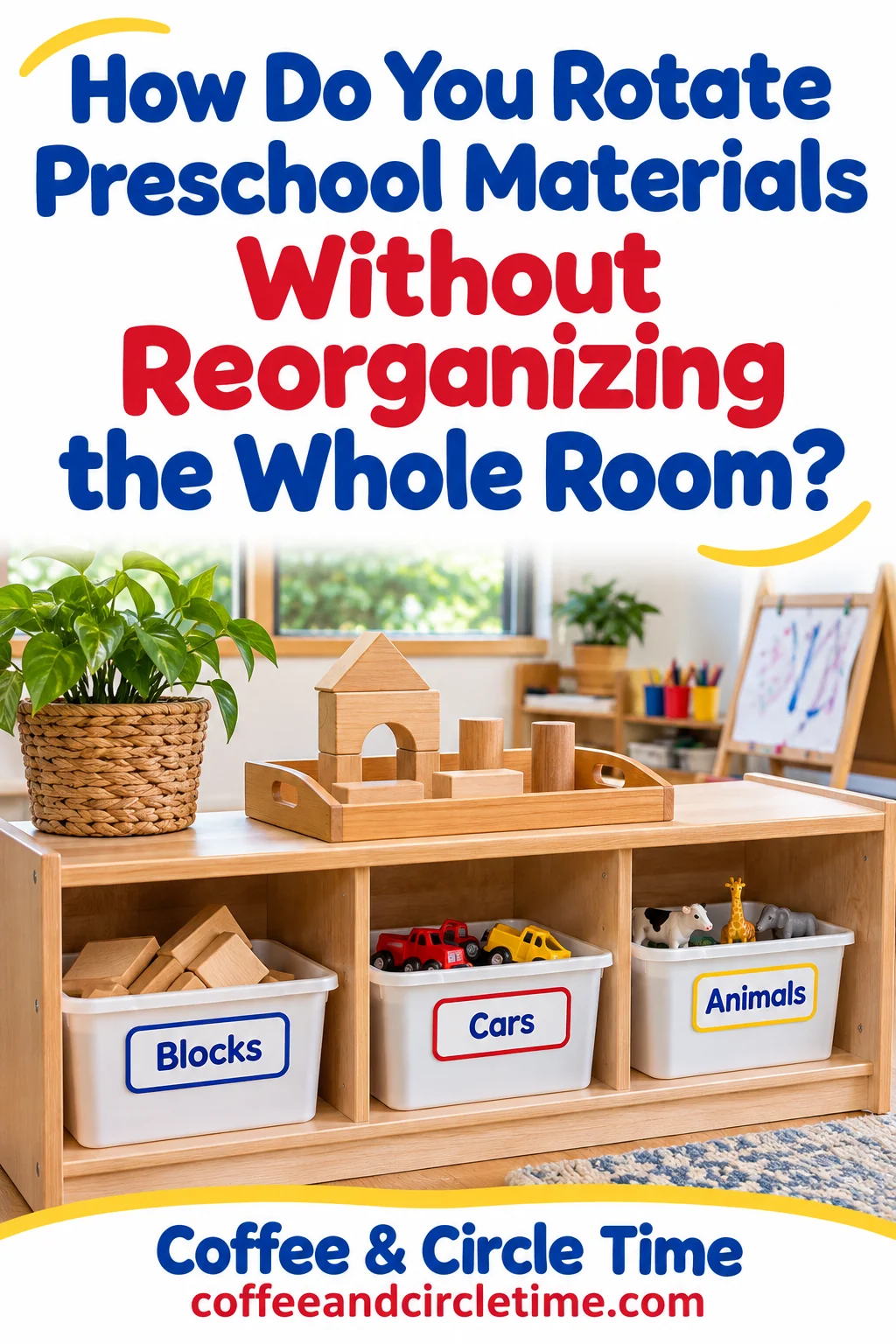
Change one defined area at a time, keep familiar storage locations and rotate materials for a clear reason. A small change based on children’s interests can refresh an invitation without making the classroom unfamiliar.
Rotate with a purpose and preserve the familiar structure of the room.
Hi, I’m Ms. Jenn, a preschool teacher with 20 years of experience. I currently teach in a two year old classroom and share practical ideas from everyday teacher life here at Coffee and Circle Time.
Choose a reason to rotate
Look for materials children have stopped using, an interest they are exploring or a practical need in the room. Avoid changing everything simply because a new week begins.
Observe how children use the current materials before deciding they are bored. A familiar item may support play that is becoming more complex.
Write the purpose of the change in one sentence. That helps keep the rotation small.
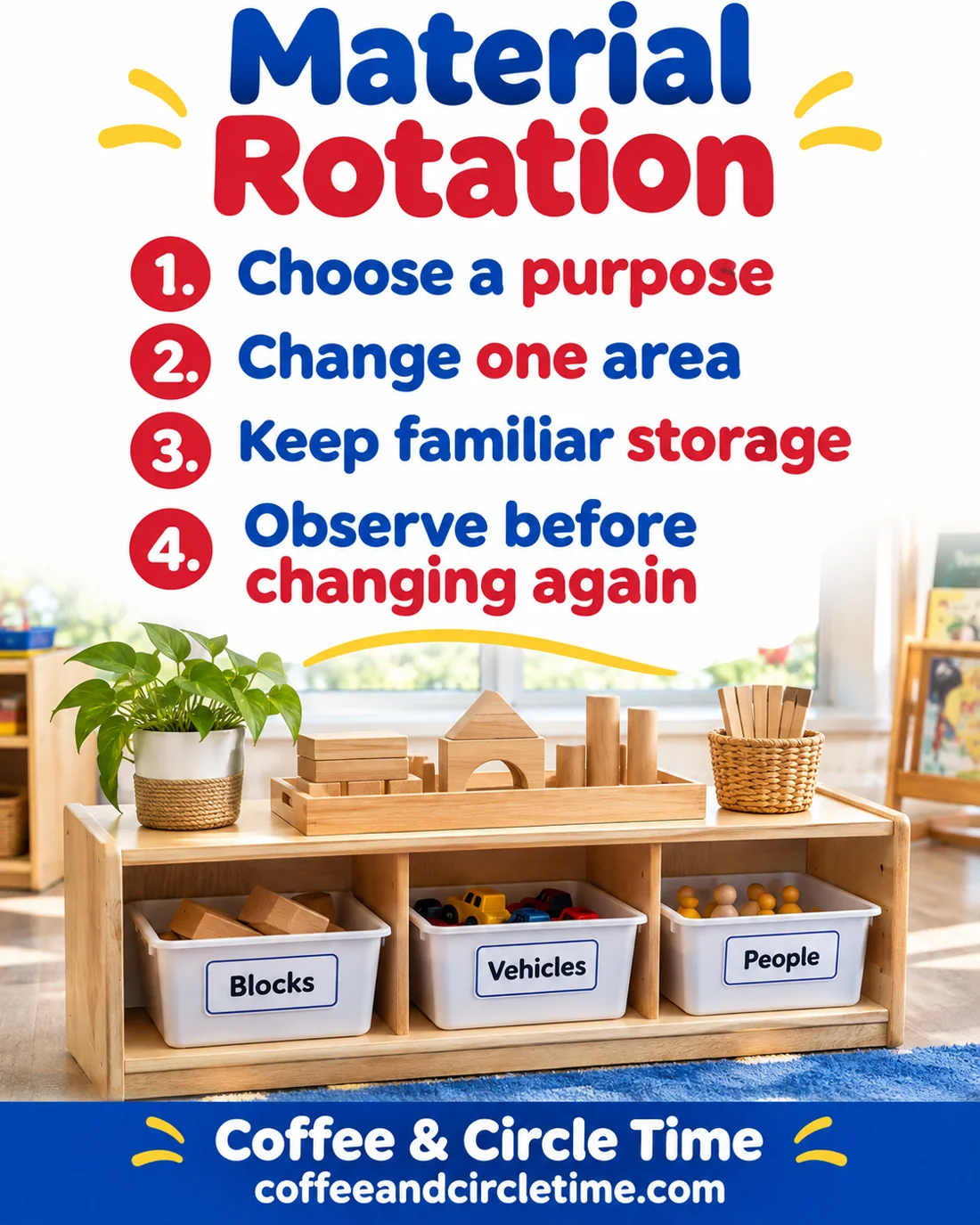
Pick one area
Choose a shelf, tray or invitation rather than the whole classroom. Keep the furniture and main walking routes familiar unless a broader change is needed and approved.
Decide what stays so children have a recognizable starting point. A new material can join a familiar collection.
A rotation can create a new possibility without requiring children to relearn where everything belongs.
Prepare the replacement first
Check condition, suitability and any instructions before the material reaches the classroom. Use your setting’s approval and cleaning procedures.
Plan the container and label so children can see how to use and return it. Avoid placing a new item in a bin whose label describes the old collection.
Keep storage limits in mind. Rotating materials should not mean creating an unidentified pile in a cupboard.
Introduce the change briefly
Show what is available and any essential handling expectations. Demonstrate a tool if children need that support.
Leave room for their ideas rather than showing one finished result to copy. The material may be used in a way you did not predict.
Give teaching partners the same information so adults do not offer conflicting directions.
Observe before changing again
Watch whether the new material is accessible, whether children can return it and what kinds of play it supports.
If it is ignored, check the placement and setup before assuming the choice was wrong. Too many surrounding materials can hide a new invitation.
Avoid rotating so quickly that children have no time to become familiar with an item. Use observations rather than a rigid demand for novelty.
Store the outgoing collection clearly
Return materials to a labeled home and record any missing pieces or repairs through your school’s process.
Keep a brief note of useful combinations for future planning. You do not need a detailed report on every rotation.
When the next change is needed, use the same small process. A maintainable rotation routine is more valuable than an impressive one time room makeover.
Rotate with a purpose and preserve the familiar structure of the room.

Leave a Reply