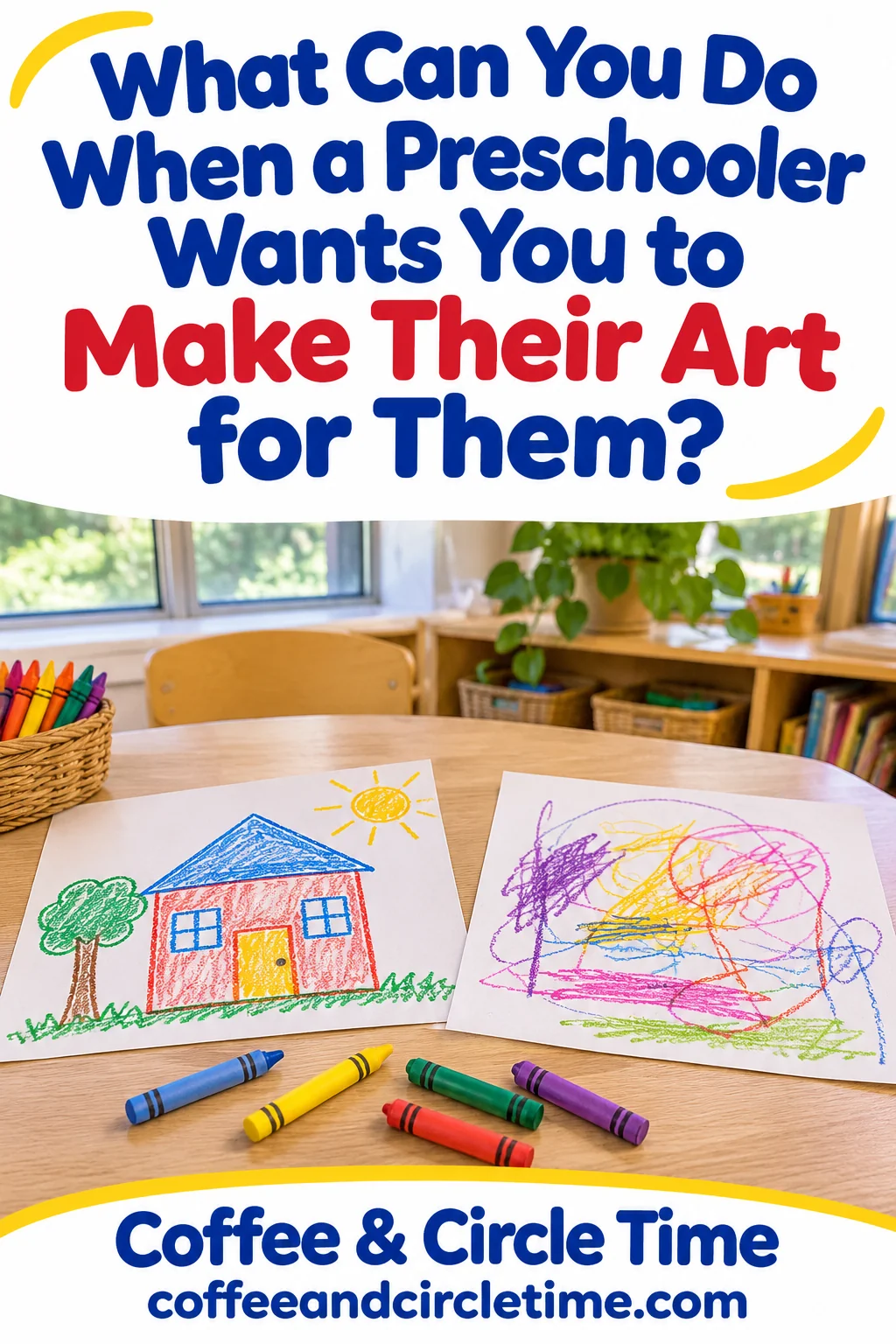
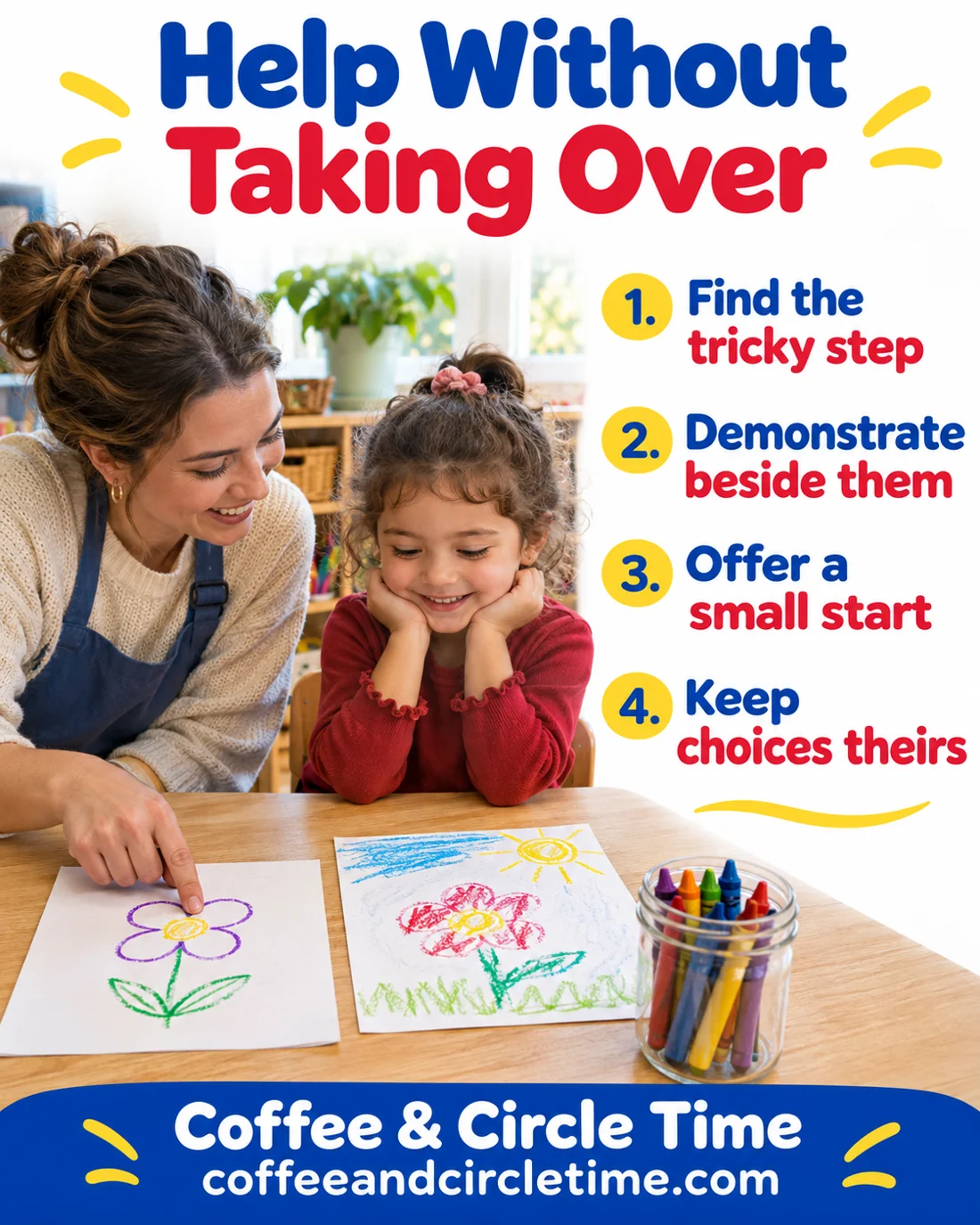
Find the exact step the child wants help with, demonstrate that step on separate paper and return the creative choices to them. You can offer support without taking over the artwork or insisting they finish independently.
Help with the barrier while keeping ownership of the artwork with the child.
Hi, I’m Ms. Jenn, a preschool teacher with 20 years of experience. I currently teach in a two year old classroom and share practical ideas from everyday teacher life here at Coffee and Circle Time.
Understand the request
“Do it for me” can mean the child does not know how to start, wants the picture to match yours or finds a tool difficult. Ask a small question such as “Would you like help opening this or making the first mark?”
Avoid assuming the child is lazy. The request gives you information about the activity and the support they think is available.
Notice whether an adult example has created an expectation of one correct result. A detailed model can make a child’s own marks seem wrong before they begin.
Separate tool help from design decisions
Opening a container or stabilizing a page may make the activity accessible while leaving the design with the child. Offer that practical help when needed.
Color, placement and whether to add another mark can remain the child’s decisions. Ask a clear question rather than choosing for them.
Support independence by handing back a manageable action, not by withdrawing all help.
Demonstrate beside the work
Use a separate scrap to show the requested action. Say what you are doing, then let the child decide whether to try.
If you draw directly on their page, your mark may become the standard they believe they must follow. A separate demonstration leaves more possibilities open.
Do not erase or cover a child’s work to improve it. Ask what they want to do with a mark they dislike and offer materials they can use themselves.
Make the starting point smaller
Offer one tool or a smaller sheet if the child appears overwhelmed. A choice between two colors can be easier than choosing from a full tray.
Try an invitation such as “You can make any marks you want with this.” Avoid turning the smaller start into a test they must pass.
Some children need time to watch before joining. Let observation be a reasonable first step within the activity choices your classroom provides.
Change how you respond to the finished work
Describe the child’s actions or invite them to tell you about the page. “You filled this corner with green” keeps the conversation grounded in their choices.
Avoid comparing the result with your example or another child’s work. The point is not to convince them that every picture is beautiful.
You can appreciate effort without inventing a story about what they made. Let the child name their work if they want to.
Review the activity itself
If several children ask adults to complete the project, it may have too many adult steps. Simplify the invitation before assuming the group needs more encouragement.
Keep adult preparation separate from the creative process. Children should have meaningful actions available once they sit down.
For the next session, remove the model to copy and offer a familiar material. Notice whether that changes how children begin.
Help with the barrier while keeping ownership of the artwork with the child.

Leave a Reply