List the essential time sensitive tasks, the preparation needed for the next part of the day and a small number of optional jobs. Keep required school responsibilities in their official systems rather than relying on a personal list to replace them.
Keep the list focused on essential actions and realistic next steps.
Hi, I’m Ms. Jenn, a preschool teacher with 20 years of experience. I currently teach in a two year old classroom and share practical ideas from everyday teacher life here at Coffee and Circle Time.
Begin with the real responsibilities
Check the schedule and the tasks your role requires that day. Include preparation or communication that has a clear deadline.
Do not copy yesterday’s unfinished list automatically. Decide whether each item still needs action and whether you are the person responsible.
Keep child supervision and required procedures central. A to do list should not encourage multitasking that takes attention away from children.
Separate must happen from would be useful
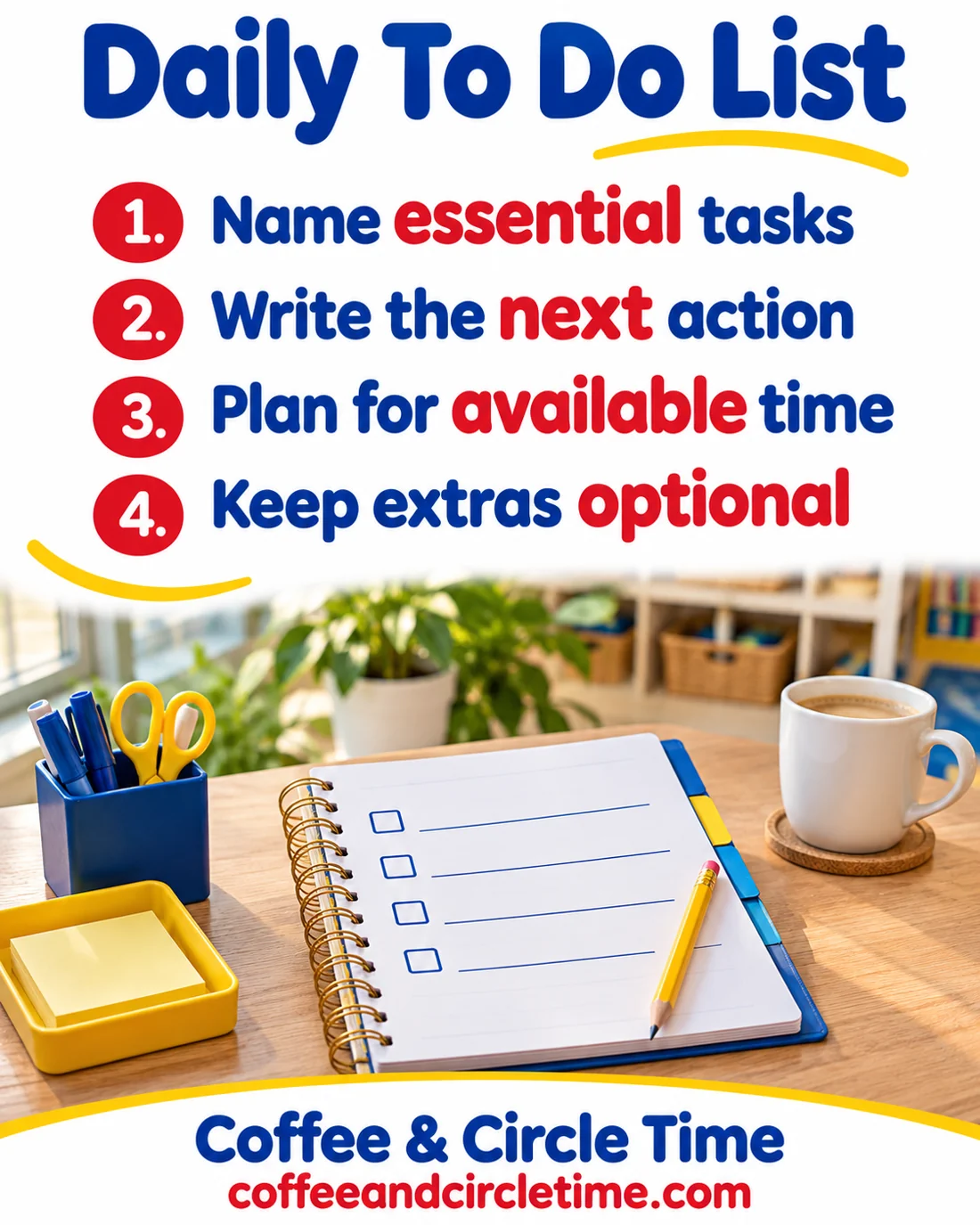
Use a simple distinction between essential tasks and optional improvements. Decorating a shelf and preparing a required lesson are not the same kind of priority.
Write the actual action: “Check tomorrow’s book” is clearer than “Get organized.” A task should tell you what completion looks like.
A useful list helps you choose the next task when time is limited.
Keep planning tasks small enough to start
Break a large project into the next practical step. Instead of redesigning the art area, you might review which tray is causing confusion.
Avoid splitting every ordinary action into a separate checkbox. Too much detail can hide the few decisions that matter.
Use the level of detail that lets you resume the work after an interruption without having to rethink it.
Match tasks to available time
Keep a few brief jobs for genuine planning windows and reserve longer work for an appropriate scheduled period. Follow your workplace’s expectations.
Do not assume every quiet moment is free time. Children still need supervision during quieter parts of the day.
If the required tasks consistently exceed the time available, discuss priorities with your supervisor. A better list cannot create staffing or planning time by itself.
Leave room for the unexpected
Keep the optional section short. Preschool days can change, and a list filled with nonessential projects can make a reasonable day look like failure.
When a new task arrives, decide whether it replaces something or belongs later. Do not simply add it to the top of an already impossible list.
Capture future ideas in a separate place so they do not compete with today’s required work.
Close the list intentionally
At the end of your appropriate work period, mark completed actions and choose what truly needs carrying forward.
Write one clear starting point for tomorrow if useful. Avoid leaving yourself a vague reminder that requires reconstructing the whole problem.
Measure the list by whether it helped you manage responsibilities. Completing every optional item is not the definition of a successful teaching day.
Keep the list focused on essential actions and realistic next steps.

Leave a Reply