
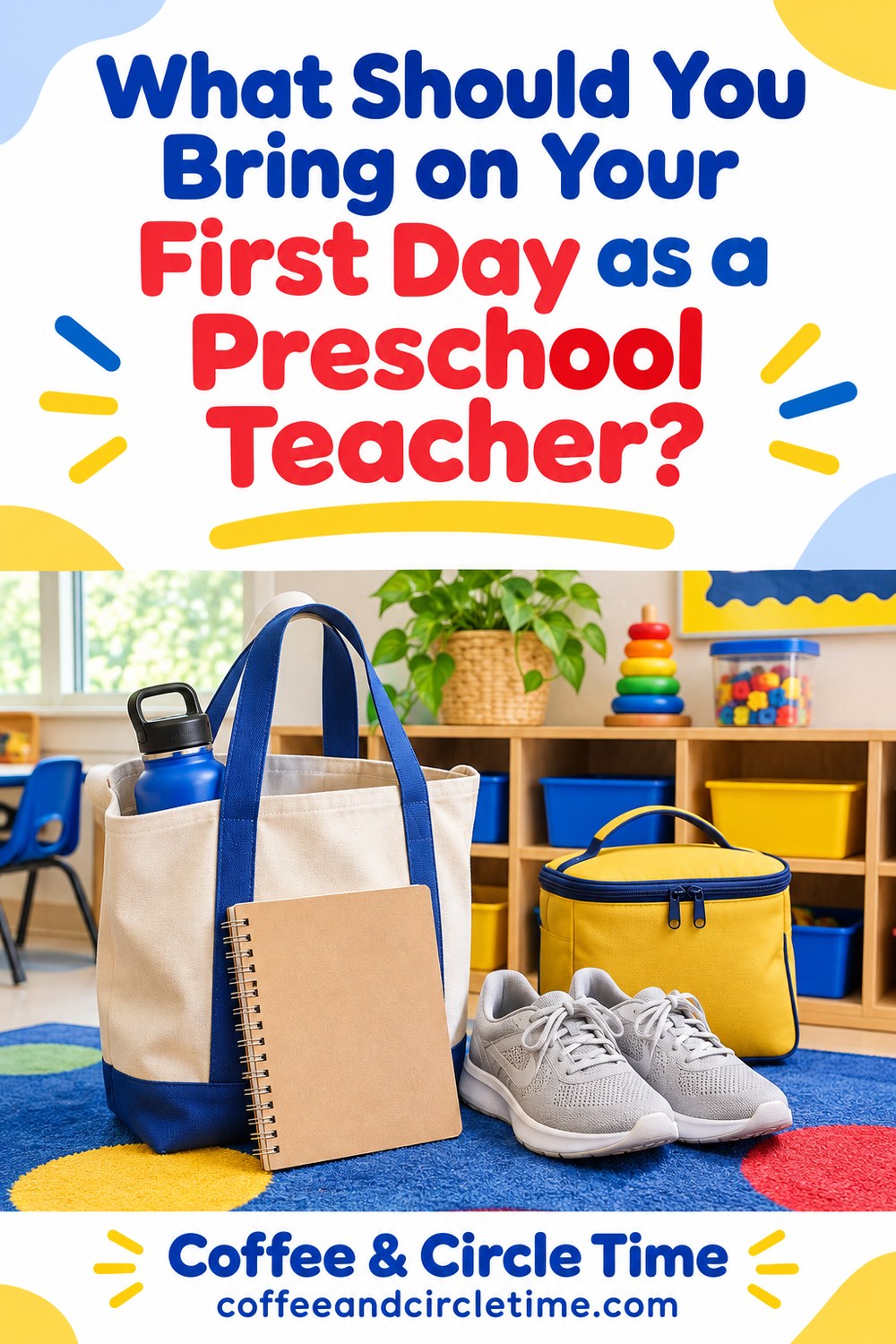
Bring the personal essentials that help you get through a classroom day: suitable clothing, comfortable shoes, a water bottle, food for your break, and any items specifically listed in your orientation information. Keep classroom supplies separate from your personal bag and use the materials your program provides.
Your first day does not require arriving with a shopping bag full of decorations, toys, and craft supplies.
Hi, I’m Ms. Jenn, a preschool teacher with 20 years of experience. I currently teach in a two year old classroom and share practical ideas from everyday teacher life here at Coffee and Circle Time.
A simple, manageable bag can be more useful than packing for every possible situation. You want to find what you need without spreading personal items across the classroom.
Use the information you have already been given about arrival, clothing, staff storage, breaks, and the daily schedule. The best preparation fits the actual workplace instead of a generic picture of what a teacher should carry.
Choose clothing you can comfortably work in
Think about the movements involved in the day. You may sit on the floor, bend near a table, reach for materials, go outside, and help children through ordinary routines.
Choose clothing that allows those movements and fits your program’s dress expectations. You do not need a special first day outfit if suitable clothing is already available.
Check practical details before leaving home. Notice whether you can sit comfortably, whether a layer is easy to remove, and whether anything repeatedly needs adjusting.
Avoid relying on clothing that only feels comfortable while standing still. The classroom day is likely to involve several changes in position and setting.
If your workplace provides a uniform or specifies particular clothing, use that guidance. Keep an appropriate spare item available if it would be useful within the storage you have.
Choose for the work you will be doing, including the ordinary messy parts.
Wear shoes that fit the day’s activities
Use suitable footwear that is comfortable for moving around the room and fits the program’s requirements. Start with shoes you already know you can wear comfortably.
A first day is not an ideal time to discover that a new pair rubs or slips. Check the fit and condition before leaving home.
Consider the surfaces and activities included in your schedule, such as indoor flooring and outdoor play areas. Follow any workplace guidance about footwear.
You do not need to choose a particular brand or buy something because it appears in a teacher bag video. The practical question is whether the footwear suits your responsibilities.
Keep any personal spare footwear in an approved staff area rather than in a place children can access. Personal items still need a clear home in a shared classroom.
If the shoes you planned to wear do not fit the requirements you were given, address that before the workday rather than improvising in the classroom.
Pack water and food for your break
Bring the food and drink you expect to need, using your workplace’s storage and food guidelines. Keep personal food separate from children’s meals and classroom materials.
A water bottle that is easy to identify can help prevent confusion with other adults’ belongings. Store it where the program permits staff drinks.
Choose food that fits the break and facilities available to you. If you do not have access to a refrigerator or microwave, plan around that information.
Keep any relevant classroom food restrictions in mind. Your personal lunch should not become an unexpected item in a children’s activity area.
Break arrangements vary, so use the schedule and procedures provided during orientation. Do not assume that a quiet classroom period automatically means you are off duty.
For a closer look at that part of the day, read what preschool teachers do during nap time. A child’s rest period and a staff member’s break are different parts of the schedule.
Bring only the documents actually requested
Review the checklist or orientation information already provided to you. Put any requested documents together so you do not have to search for them when you arrive.
You may have completed most paperwork before the first day. There is no reason to carry an entire folder of unrelated personal records just because you are starting a new job.
Keep documents containing personal information in a secure part of your bag. Follow the workplace’s process for submitting them to the appropriate person.
Use a simple list to confirm what is packed. “Requested forms, identification if needed, arrival information” is easier to check than repeatedly opening every pocket.
If a document has already been submitted, note that rather than making extra copies without a purpose. The goal is to arrive prepared for the actual next step.
Pack according to the information you have been given, not every possible item mentioned online.
Have a small way to record ordinary questions
A small notebook or another approved method can help you remember routines and questions during orientation. Use something easy to put away when your attention needs to return to the children.
Write general reminders such as the location of spare materials or the order of a cleanup routine. You do not need to produce a detailed record of every moment.
Keep children’s private information out of a personal notebook. Use the program’s approved systems for records, observations, and information that needs protection.
If staff use a shared planning or communication system, learn that process rather than creating a competing one. A personal reminder should help you follow the routine already in place.
You can leave space for questions to raise at an appropriate time. Recording a question may be more practical than interrupting someone during a busy transition.
The notebook is optional if another approach works better. You do not need stationery purchases to demonstrate that you are prepared.
Keep personal items secure and out of the learning space
Choose a bag that holds what you need without creating a storage problem. Use the staff storage area designated for personal belongings.
Think about what children could access if the bag were open or left nearby. Personal products, keys, cords, and small items do not belong among classroom choices.
Keep your phone within the program’s expectations for staff use. A charged phone may be useful for your journey and break, but classroom communication should follow the workplace’s procedures.
Do not assume you should use a personal device to photograph children, contact families, or store classroom information. Use only the processes the program has authorized.
Make the arrangement simple enough to maintain during a busy day. Returning the bag to its proper place should not require moving classroom materials each time.
A prepared personal bag stays separate from the materials children can choose.
Arrive ready to learn the classroom’s routines
The most useful preparation is not always something you can pack. Give yourself a realistic plan for the journey and the arrival time you were assigned.
Keep the relevant entrance and contact information accessible before setting off. That removes one unnecessary search when you reach the building.
Once there, focus on how the classroom works. Learn the established routines, the roles of the adults present, and how supervision is maintained during transitions.
Head Start’s guidance on active supervision emphasizes intentional adult attention and a planned approach to watching children. Treat your workplace’s supervision orientation as something to understand before taking on unfamiliar routines.
You can read the broader guidance on keeping children safe through active supervision. Your program’s own procedures explain how that work is organized in your setting.
Leave the extra classroom shopping out of your first day plan
Use the classroom materials and preparation process already in place. A teacher does not need a personally funded collection to contribute thoughtfully.
If you have ideas for activities or organization, write them down and learn the room first. You can discuss them through the program’s normal planning process when appropriate.
Avoid bringing unrequested toys, food, craft materials, or decorations into children’s areas. The program needs to determine what belongs in the classroom and how it is used.
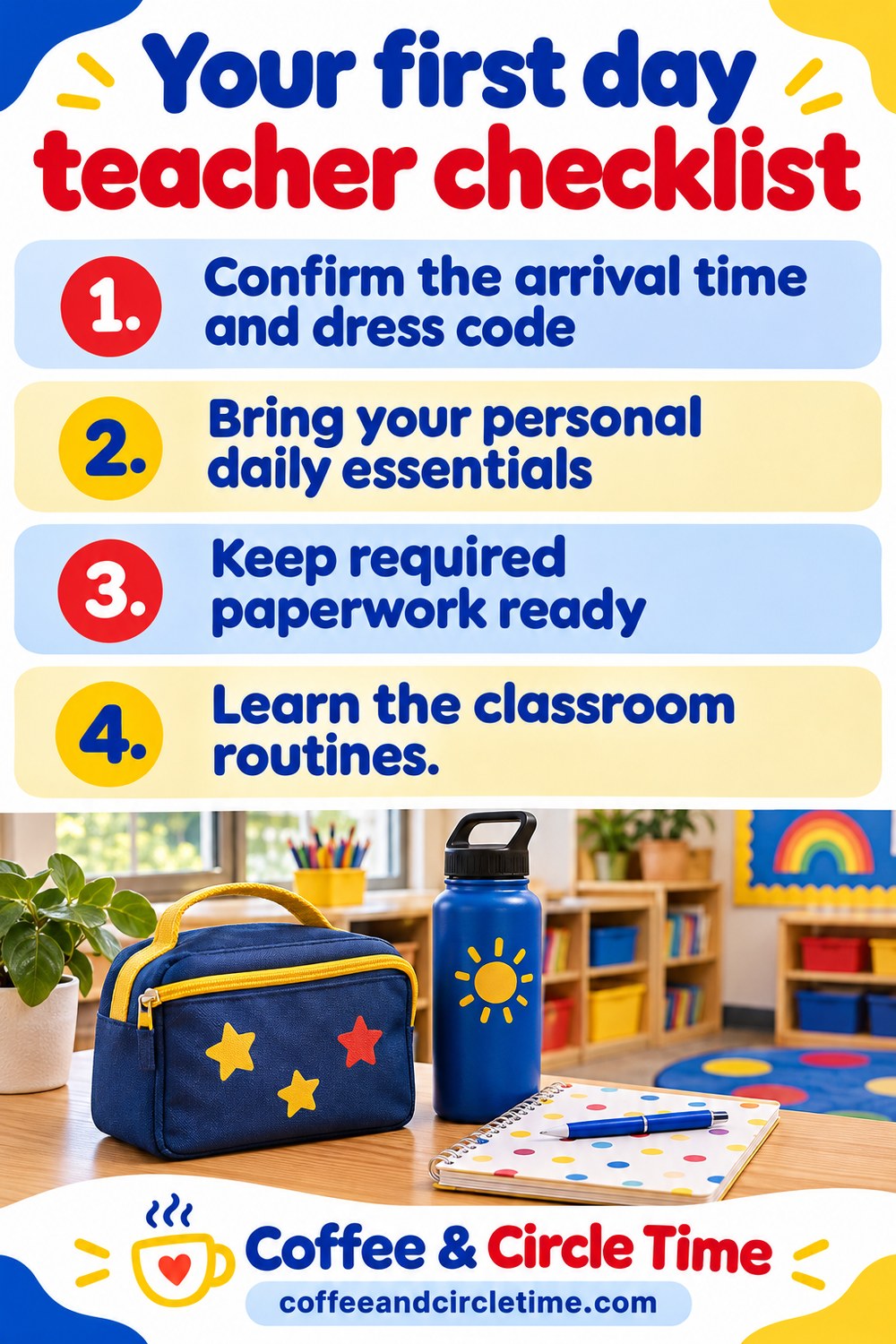
A useful first day checklist can stay short: suitable clothing and footwear, your personal food and water, requested documents, and a clear arrival plan.
Come prepared for the day you have been assigned, with room to learn how this classroom works.
You can add to your personal routine after you see what you actually use. Starting with the essentials makes it easier to focus on the children, your coworkers, and the work in front of you.

Leave a Reply